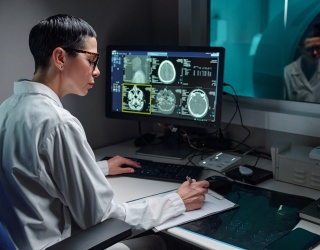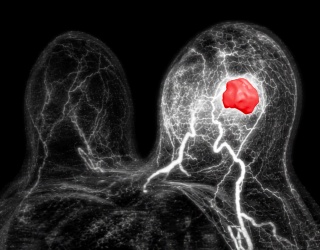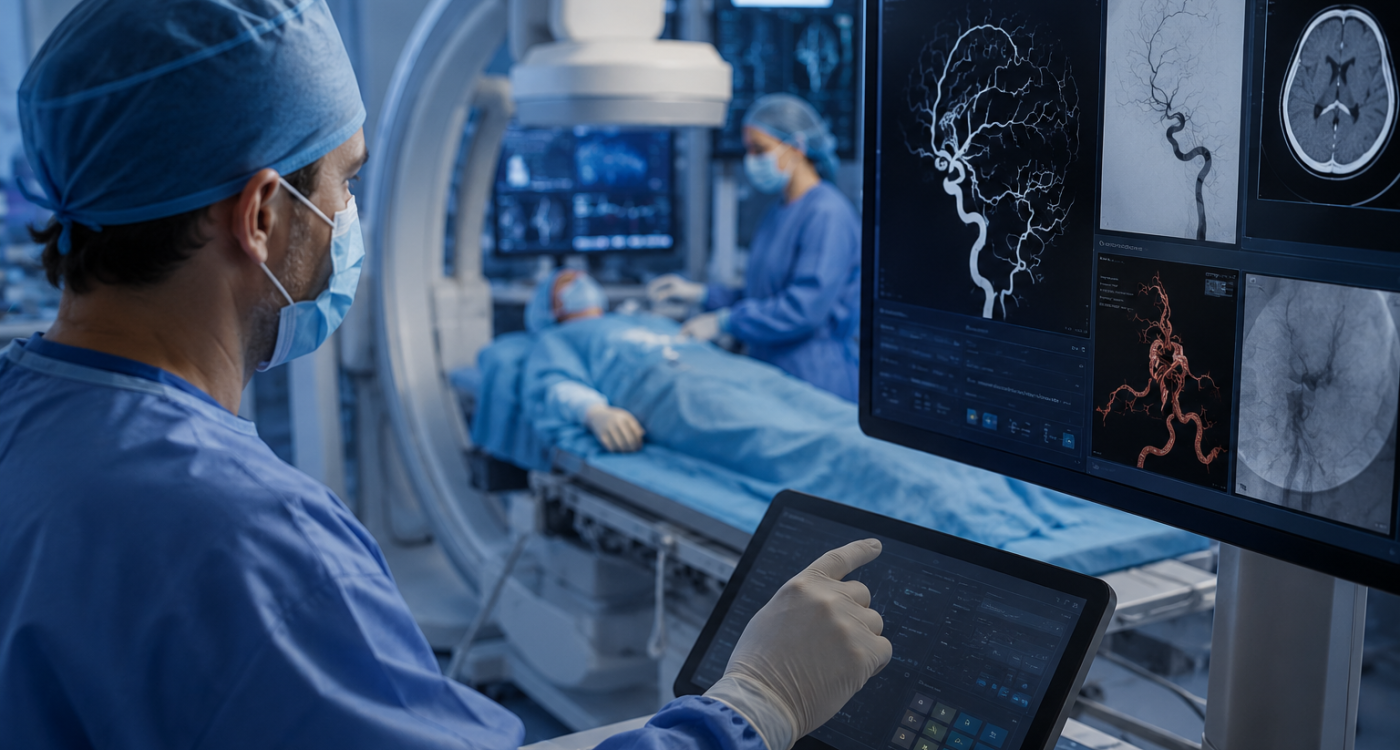
Europe's healthcare systems are under growing pressure. Minimally invasive image-guided procedures are becoming more common in areas such as neurology and oncology, but the number of highly specialized interventional radiologists is not growing at the same pace. According to the World Health Organization (WHO), the global healthcare sector could face a shortage of 15 million healthcare professionals by 2030. Especially for interventional radiology, where physicians require years of specialized training, this shortage presents a particular challenge.
At the same time, radiology departments are dealing with increasing imaging volumes, more complex procedures, and growing workloads. The discussion is therefore shifting from whether AI belongs in healthcare to how it can help support physicians while maintaining high standards of patient care.
Supporting Physicians Through AI
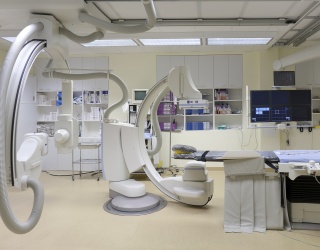
Against this backdrop, the European Smart Human-centred Effortless support for Professional clinical Applications (SHERPA) project is exploring how assistive artificial intelligence (AI) and robotic technologies could support interventional radiologists throughout complex procedures. Coordinated by Philips Image Guided Therapy, the project brings together 16 partners from seven European countries and receives funding through the European Union's Innovative Health Initiative (IHI), illustrating how Europe is investing in collaborative approaches to address growing healthcare challenges.
Rather than positioning AI as a replacement for physicians, the project focuses on technologies designed to reduce repetitive tasks and improve workflow efficiency. Depending on the stage of the intervention, the technologies under development are designed to assist with treatment planning, image-guided navigation, workflow automation, post-procedural confirmation, and clinical decision-making, while physicians remain responsible for all clinical decisions.
“As demand for image-guided therapies continues to grow while specialist shortages persist, projects like SHERPA demonstrate how assistive AI technologies can help bridge the gap. By streamlining complex workflows, reducing repetitive tasks, and supporting clinical decision-making, SHERPA aims to reduce workload, improve procedural efficiency, and enhance access to specialised expertise. Importantly, these technologies are being developed with a human-centred approach that keeps physicians firmly at the centre of clinical decision-making, ensuring that innovation strengthens, rather than replaces, clinical expertise and patient care.”
- Robert Hofsink, Project Coordinator, SHERPA from Philips Image Guided Therapy
Extending Access to Specialist Expertise
One of the biggest challenges facing European healthcare is how to make specialist expertise available to more patients despite persistent workforce shortages. Complex interventional procedures are often concentrated in highly specialized centers, creating growing pressure on experienced clinical teams.
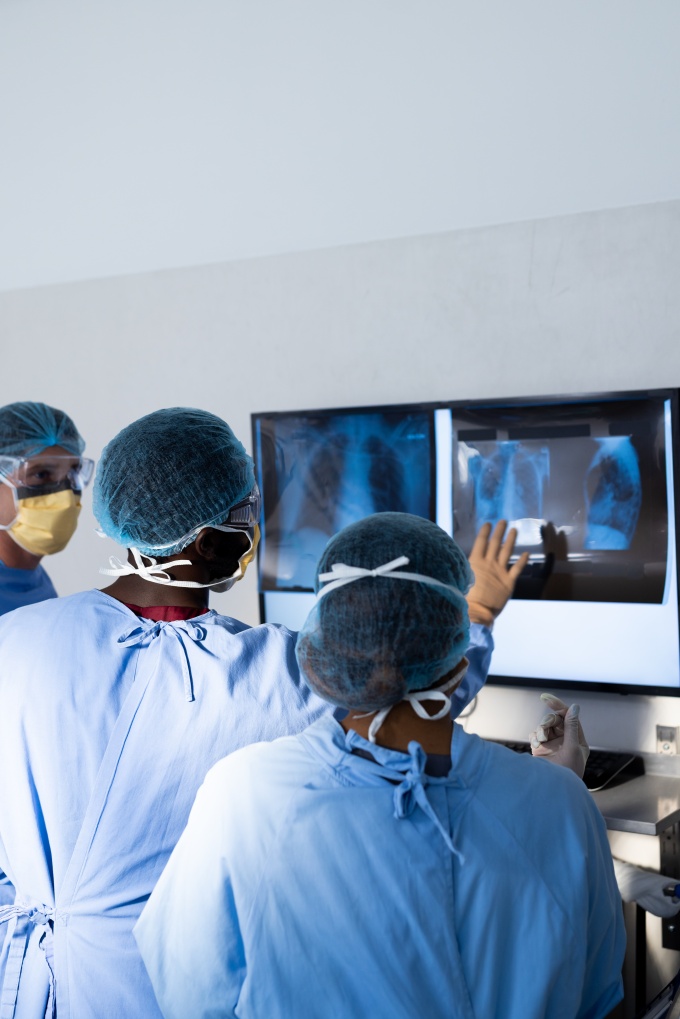
Projects such as SHERPA are investigating whether assistive AI can help standardize parts of image-guided workflows, support less experienced teams, and improve procedural consistency. The objective is not to replace specialist knowledge but to enable clinicians to manage increasing complexity more efficiently, supporting safer procedures, more consistent clinical decision-making, and ultimately better patient care.
Unlike many AI initiatives that focus primarily on algorithm development, SHERPA also emphasizes clinical validation. The project is conducting seven clinical studies in two demanding applications, brain aneurysm interventions and liver tumor ablations, to evaluate the safety, usability, and effectiveness of assistive technologies in real-world clinical settings.
SHERPA is also evaluating how assistive AI affects workflow efficiency, clinician workload, workforce sustainability, and patient experience. This reflects a growing expectation that healthcare AI should demonstrate measurable value before becoming part of routine clinical practice. Ultimately, the goal is not only to improve workflow efficiency, but also to support more precise interventions and contribute to better patient outcomes.
Building Trust for Wider Adoption
Clinical adoption depends on more than technological capability alone. Workflow integration, transparency, and clinician confidence remain essential for the successful implementation of AI-supported solutions, particularly in high-risk interventional procedures.
By bringing together the various partners from seven European countries, SHERPA reflects a broader European strategy of translating AI research into practical healthcare solutions through public-private collaboration. Rather than focusing solely on technological innovation, these partnerships aim to generate the clinical evidence needed to support safe and effective implementation in routine practice.

In addition, reducing repetitive tasks and supporting more efficient workflows, assistive AI could also help reduce cognitive burden and contribute to addressing burnout among interventional radiologists.
While assistive AI alone will not solve Europe's workforce challenges, projects such as SHERPA demonstrate how these technologies are increasingly being developed as practical tools to support physicians, improve efficiency, and help healthcare systems adapt to growing demand. Rather than automating entire procedures, assistive AI is being designed to complement clinical expertise during different stages of image-guided interventions, supporting Europe's efforts to strengthen healthcare systems through collaborative research and innovation.