First Approval for Low-Dose MRI Contrast Agent
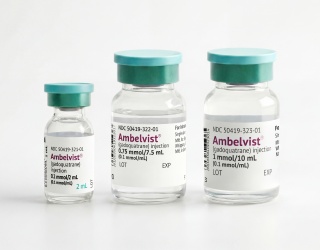
Bayer has announced that Japan’s Ministry of Health, Labour and Welfare has approved Ambelvist™ (gadoquatrane), marking the first global authorization of this low-dose MRI contrast agent. The approval covers all indications and all patient groups, including adults, pediatric patients, and newborns.
Ambelvist™ is a macrocyclic gadolinium-based contrast agent (GBCA) designed for contrast-enhanced magnetic resonance imaging (MRI) across all body regions, including the central nervous system (CNS). According to Bayer, the agent enables a 60% reduction in gadolinium dose per procedure compared to currently available macrocyclic contrast agents on the Japanese market, while maintaining diagnostic image quality.
Addressing Demand for Low-Dose Imaging
The approval comes amid increasing clinical focus on minimizing gadolinium exposure, particularly for patients requiring repeated imaging. Low-dose MRI contrast agents are considered relevant for oncology, cardiovascular imaging, and long-term disease monitoring.
“All medicines should be administered at the lowest effective dose, and MRI contrast agents are no exception,” said Prof. Kohsuke Kudo, Department of Diagnostic Imaging, Hokkaido University, Japan. “Reducing patients’ lifetime exposure to gadolinium is therefore an important consideration. This is particularly relevant for patients with chronic conditions such as cancer and cardiovascular disease who require repeated MRI examinations, as well as for those with renal impairment and for pediatric patients. By substantially reducing the gadolinium dose while maintaining diagnostic image quality, gadoquatrane may represent a highly valuable option in advancing patient-centered care.”
Japan represents a key market for MRI, with one of the highest numbers of MRI scanners per capita worldwide. The introduction of a low-dose GBCA aligns with clinical and regulatory guidance recommending the lowest effective dose for diagnostic imaging.
Clinical Evidence from QUANTI Program
The approval of Ambelvist™ is based on Bayer’s QUANTI clinical development program, which includes Phase III studies (QUANTI CNS and QUANTI OBR) and a pediatric study.
Key findings from the program include:
- 60% gadolinium dose reduction compared to standard macrocyclic GBCAs (0.04 mmol/kg vs. 0.1 mmol/kg)
- Comparable visualization performance in blinded independent reads
- Consistent efficacy across indications, including CNS, abdominal, cardiac MRI, and magnetic resonance angiography (MRA)
- Similar pharmacokinetics and safety profiles in adults and pediatric patients
- No new safety signals observed
These results support the use of gadoquatrane as a low-dose alternative without compromising diagnostic performance.
Global Regulatory Strategy
Bayer has submitted applications for marketing authorization of gadoquatrane in additional regions, including the United States, the European Union, and China. If approved, the agent could become one of the lowest-dose macrocyclic MRI contrast agents available in these markets.
“This first approval for Ambelvist™ is supported by compelling clinical data, underlining its diagnostic value for broad clinical use. The approved comprehensive label in Japan comprises all patient populations and age groups, reducing the need for alternative agents for different patient populations,” said Dr. Konstanze Diefenbach, Head of Radiology R&D at Bayer’s Pharmaceuticals Division. “With this next generation high-relaxivity, low-dose MRI contrast agent demonstrating high stability, Bayer responds to the evolving demand for low-dose options to achieve diagnostic goals. This also showcases our commitment to advancing radiology with innovations that support patients and their treating physicians in getting clear answers about their health.”
Implications for Radiology Practice
The availability of low-dose contrast agents may support efforts to optimize patient safety while maintaining diagnostic confidence. This is particularly relevant in settings requiring repeated MRI scans and in vulnerable patient populations.
Source: Bayer AG