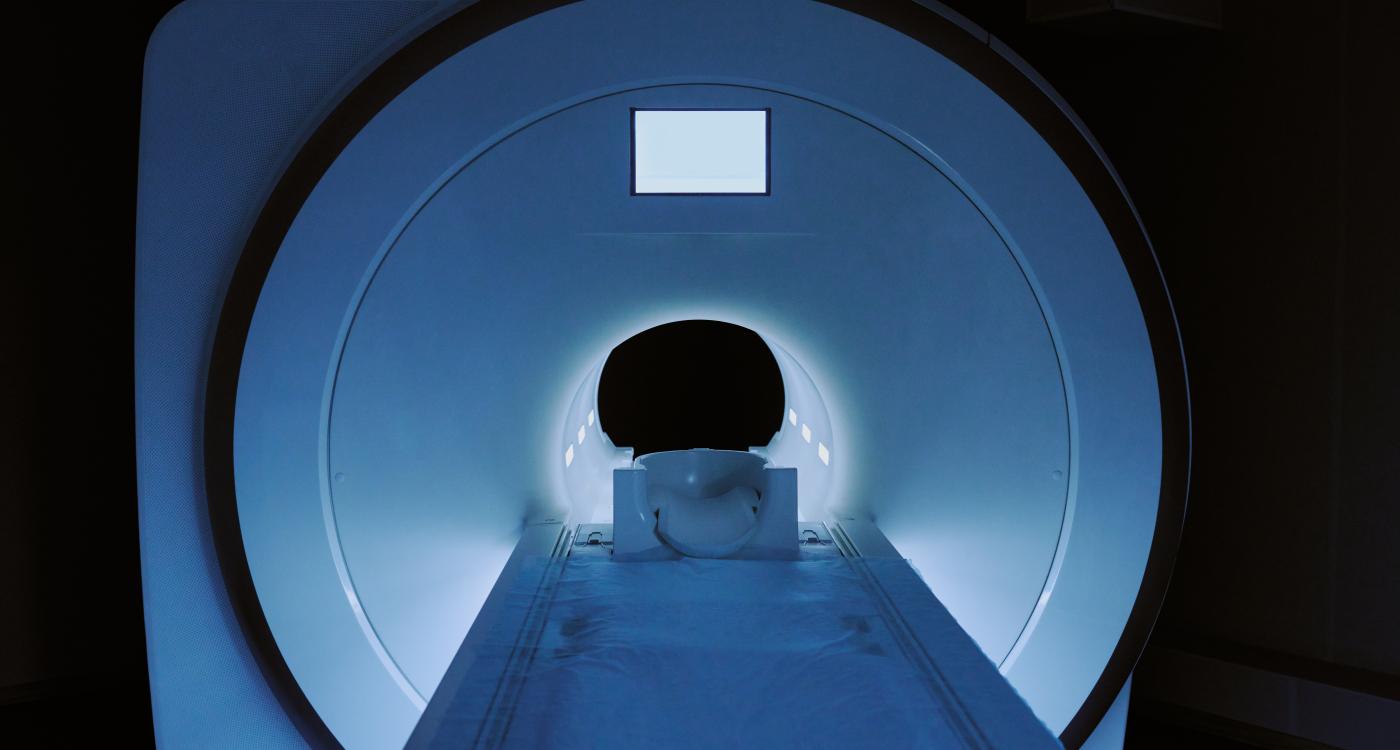
GE HealthCare Expands AI-Powered MRI Portfolio at ISMRM 2026
At the International Society for Magnetic Resonance in Medicine (ISMRM) 2026 Annual Meeting, GE HealthCare announced new MRI technologies and research collaborations aimed at supporting advanced imaging research, workflow efficiency, and clinical MRI applications. The company’s showcase includes developments in AI-powered MRI workflows, deep-learning image reconstruction, helium-free MRI systems, and neuroscience research platforms.
According to GE HealthCare, the new technologies are designed to help research institutions and healthcare providers improve imaging consistency, accelerate scan workflows, and support collaboration across clinical and academic environments.
AI-Driven MRI Workflow and Deep-Learning Technologies
A central focus of the company’s presentation is SIGNA One, GE HealthCare’s new AI-powered MRI workflow ecosystem. The platform is intended to simplify MRI operations, improve workflow efficiency, and support more standardized imaging across clinical and research settings.
SIGNA One includes:
- AI-guided user experience
- One-click switching between clinical and research modes
- Integrated workflow management tools
- Support for consistent imaging protocols across sites and studies
The company also announced the U.S. FDA 510(k) pending status of Sonic DL for 2D imaging beyond cardiac cine. According to GE HealthCare, the deep-learning acceleration technology is designed to reduce MRI scan times and expand AI-supported imaging capabilities across a larger proportion of MRI examinations.
In addition, AIR Recon DL is being expanded to support Zero Echo Time (ZTE) and Silenz low-acoustic-noise imaging. GE HealthCare stated that the technology can help improve image quality and reduce scan times for advanced MRI applications.
New MRI Systems and Research Collaboration
GE HealthCare also highlighted two MRI systems during ISMRM 2026:
SIGNA Bolt
The FDA-cleared 3T MRI system is built on the SIGNA One platform and is designed to support AI-enabled imaging workflows while maintaining lower operational costs and reduced energy consumption.
SIGNA Sprint with Freelium
The system introduces helium-free MRI technology with less than one percent helium usage and no vent pipe requirements, according to GE HealthCare.
The company also introduced SIGNA Studio, a software development and collaboration suite intended to support MRI research programs and accelerate deployment of research tools.
As part of its neuroscience research initiatives, GE HealthCare announced additional installations of the investigational MAGNUS prototype head-only MRI scanner at King’s College London and West China Hospital.
“This installation at King’s College London represents an important step forward for neuroscience research,” said Dr. Steve Williams, Professor of Imaging Sciences at King’s College London. “This platform gives us the ability to investigate aspects of brain structure and function that were previously out of reach, helping advance our understanding of neurological disease and opening new research possibilities.”
GE HealthCare also noted ongoing integration of icometrix and the icobrain platform to support quantitative brain MRI analysis and neurological care pathways, including Alzheimer’s disease imaging.
Source: GE HealthCare