Whole-body coverage for MSK radiography
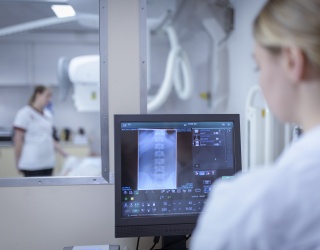
HOPPR has announced the beta release of its FS MSK Whole-Body Narrative Model, a vision-language foundation model designed to generate draft findings text from musculoskeletal (MSK) X-ray images.
The model processes up to three views per study and is intended as a software component for developers building radiology reporting and image-based workflow applications. Through its Forward Deployed Services (FDS), HOPPR offers support for evaluating, customizing, and integrating the model into existing workflows.
The model covers multiple anatomical regions across the musculoskeletal system, including the spine, thorax and chest wall, upper extremity, and pelvis and lower extremity. This provides developers with a single starting point for report drafting across different body regions.
Training data and evaluation
According to HOPPR, the model was trained on approximately 674,000 proprietary outpatient MSK studies, with the dataset balanced across body parts. Its focus is on describing abnormalities rather than normal anatomy.
HOPPR evaluates the model against 26 MSK finding categories. These include fractures, degenerative joint and spine changes, alignment, soft tissue, bone quality and lesions, and hardware.
Commenting on the rationale behind the whole-body approach, Khan Siddiqui, MD, co-founder and CEO of HOPPR, said: "Organizations shouldn't need a separate AI model for every bone and joint. Musculoskeletal imaging spans the whole body, and a single model trained across it gives developers a far stronger foundation to build on. The FS MSK Model offers one whole-body model for generating draft findings text, and our Forward Deployed Services team works with each customer to adapt it to their data and workflows."
Customization and workflow integration
HOPPR's FDS team comprises machine learning scientists, software engineers, data scientists, and clinical experts. The team works with organizations to customize the model using their own data, develop supporting labeling workflows, integrate it into existing systems, and support validation testing in the customer's environment.
The model's name, FS, honors Dr. Florence Ada Stoney (1870–1932), widely credited as the first woman radiologist in the United Kingdom. She established an X-ray department at Elizabeth Garrett Anderson Hospital for Women in 1902 and later led the X-ray department at Fulham Military Hospital during World War I.
Roger Boodoo, MD, Medical Director of AI at HOPPR, explained the historical connection behind the name: "Dr. Stoney practiced radiology when the field was young and few doors were open to women. Naming this model in her honor recognizes the people who helped build the discipline our work depends on."
The FS MSK Whole-Body Narrative Model is currently available in beta as a software component, not a medical device. It provides draft findings text for MSK radiographs, while HOPPR's FDS offering supports organizations in adapting and integrating the model into their own reporting environments.
Source: HOPPR