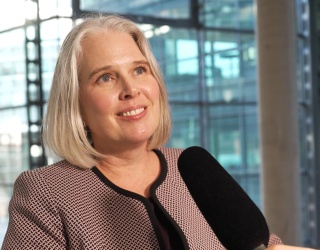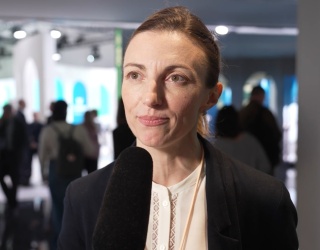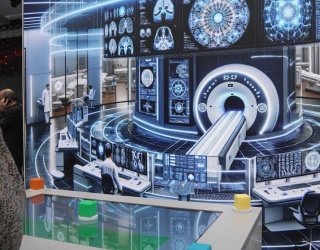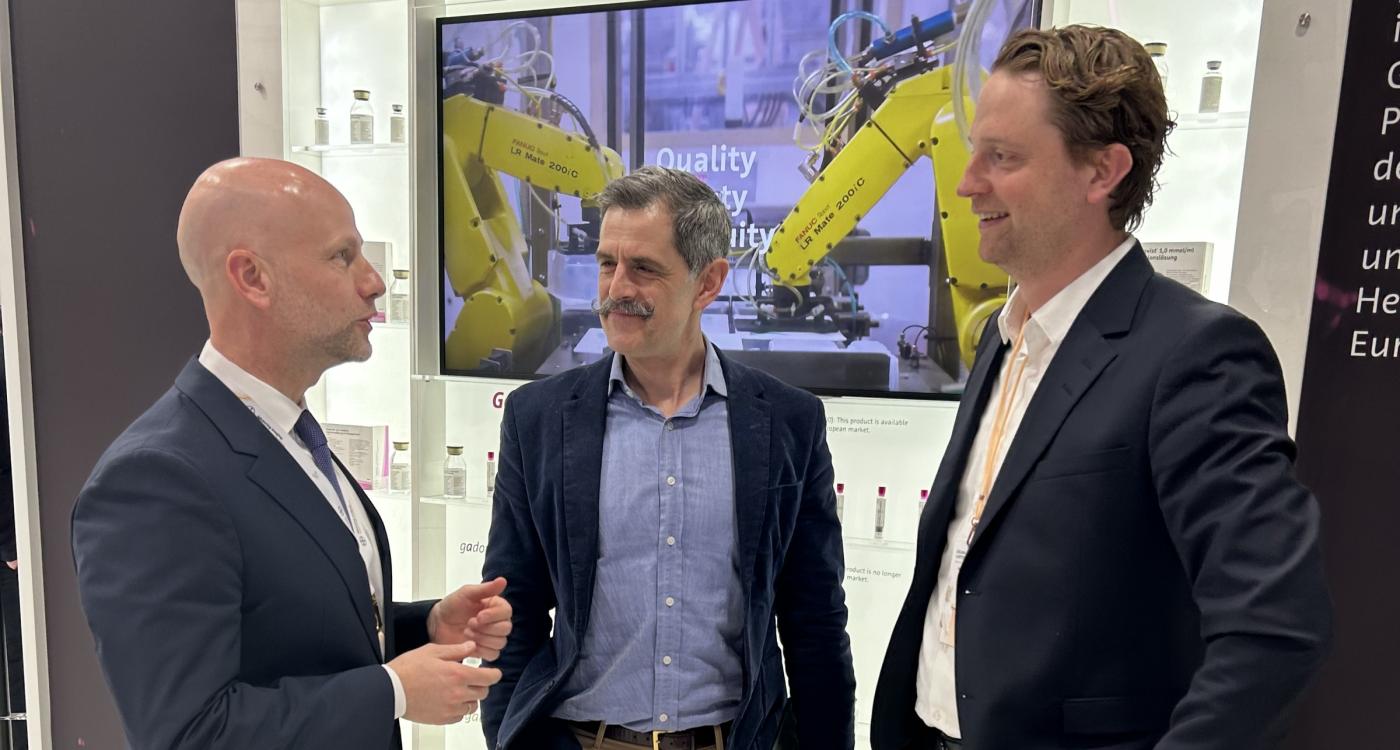
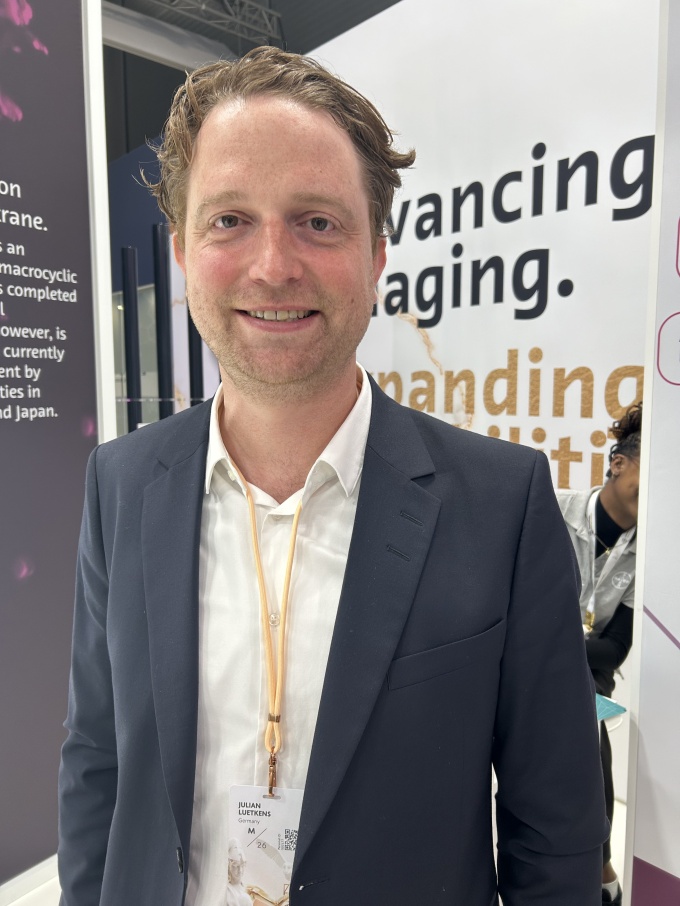
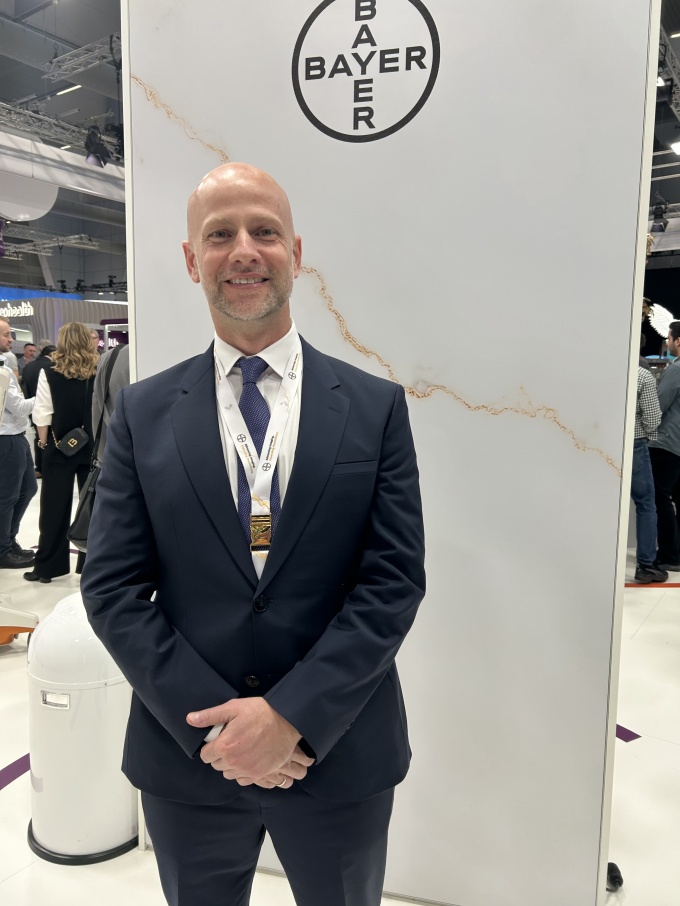
In an interview, Prof. Dr. Julian Luetkens, Chair of Radiology at the University Hospital Bonn, and Nelson Ambrogio, President Radiology at Bayer, discussed emerging trends in imaging, including AI-supported workflows and new data on the investigational low-dose MRI contrast agent gadoquatrane.
Prof. Luetkens, you are the new Chair of Radiology at the University Hospital Bonn. You said once that radiology essentially functions like an airport hub in the healthcare system. Can you explain what you mean by this?
Prof. Dr. Julian Luetkens: Radiology is really a central interface within a hospital. It’s also a critical infrastructure, especially in a university medical center, because almost every aspect of modern medicine relies on imaging. We need radiology for diagnosis, for treatment planning, and for monitoring patients.
If someone is admitted to the hospital, it usually doesn’t take long before they pass through radiology. They might receive a CT scan or an MRI, and based on those images, we can establish a diagnosis or narrow down possible conditions. That information then directly influences the patient’s further journey.
Radiologists help determine what the underlying disease might be and provide crucial information that guides the next treatment steps, whether therapy should start, continue, or change. That’s why I like to compare radiology to an airport hub: patients arrive, we generate new diagnostic information, and then they continue their path through the healthcare system with a clearer direction for treatment.
As a renowned MRI expert, which significant innovation do you see here at ECR in this area?
Luetkens: One of the key topics we should focus on, and that research is increasingly addressing, is improving access to MRI. In Europe and many other regions, we have an aging population, and imaging is becoming more and more important. As a result, the demand for scans, particularly MRI scans, is steadily increasing. To meet this demand, we need to make MRI more accessible.
That requires innovation across the entire MRI workflow, starting with patient preparation. Imaging protocols need to become shorter and more focused, and the scans themselves must be faster.
A major trend in this context is AI-based image reconstruction. With these techniques, scans can be acquired with higher acceleration or reduced sampling, which makes the acquisition significantly faster. AI can then compensate for the resulting limitations, for example, by reducing artifacts or restoring spatial resolution. In this way, you achieve high-quality images while significantly shortening scan times. I believe this is a real game-changer.
Beyond that, automated planning and scanning can help make MRI more accessible, especially in times when there is a shortage of technical staff. And finally, another major development is AI-supported diagnosis and automated reporting using generative AI models.
Nelson, around MRI, Bayer is presenting new data for its investigational low-dose contrast agent gadoquatrane. What is it about, and why is this important for patients?
Nelson Ambrogio: Twelve months ago, here at ECR 2025, we presented the results of one of the QUANTI studies, a Phase 3 trial of our investigational MRI contrast agent gadoquatrane, to the scientific community. Now, at ECR 2026, we are sharing additional data from that our clinical development program. This includes results from specific subgroups, such as abdominal imaging, central nervous system imaging, MR angiography, as well as new pharmacokinetic data.
These findings are important because they further confirm the strong diagnostic performance of gadoquatrane while at the same time demonstrating that the dose of gadolinium can be reduced by up to 60 percent. This is particularly relevant for patients who need repeated MRI examinations, such as cancer patients, as well as for vulnerable groups like pediatric patients. A lower-dose gadolinium-based contrast agent can help reduce lifetime exposure to gadolinium, which can be a meaningful benefit for these populations.
The data have been very well received by the scientific community. We have already submitted our regulatory applications in major markets, including the European Union, the United States, Japan, and China. We are now working closely with the authorities, and the process is progressing as expected. We are hopeful that we will have positive news on this front later this year.
What will be the next steps for gadoquatrane?
Nelson: Once we receive approval, the focus will be on launching the product. Based on the profile that gadoquatrane has shown so far, we believe it has the potential to be broadly used across different patient populations. That was also the intention behind the study design, and the data we have shared with the scientific community supports that expectation.
For a clinician, what would be the expected lead time from approval to them being able to get material in their department?
Nelson: Our ambition is to deliver the product as soon as possible. However, that can vary depending on the country and the regulatory requirements. For example, in some markets, after regulatory approval, an additional pricing and reimbursement process is required, which can take a few weeks or sometimes a few months.
Prof. Luetkens, what role does cardiac MRI play in patient care today, and what potential benefits could a low-dose contrast agent like gadoquatrane bring for patients?
Luetkens: Cardiac MRI is becoming increasingly important in patient care. Today, it has several class I indications across a range of conditions, including coronary artery disease, congenital heart disease, cardiomyopathies, as well as myocarditis and pericarditis.
A particularly important development was the publication of the first ESC guideline on myocarditis in 2025. According to this guideline, cardiac MRI can now play a central role in confirming the diagnosis. In the past, an endomyocardial biopsy was often required to definitively prove myocarditis. Now, if a patient presents with a clinical suspicion and cardiac MRI shows the typical inflammatory pattern, the diagnosis can be established non-invasively.
This highlights how strongly cardiac MRI is being integrated into clinical guidelines and everyday patient care. The guideline also recommends follow-up imaging with cardiac MRI for patients with myocarditis, which further increases the demand for these examinations.
This is where a contrast agent like gadoquatrane could become particularly relevant. As the number of cardiac MRI studies grows and more patients require repeated scans for follow-up, having a low-dose contrast agent can help reduce the lifetime exposure to gadolinium. In addition, there may also be potential environmental benefits.
In the QUANTI studies, cardiac MRI examinations were also included in the analysis, and we hope that the data will support approval of gadoquatrane for cardiac MRI in Europe and the United States. That would be an important step forward.
Now we're obviously concentrating heavily on gadoquatrane, but more generally, what do each of you see in the intermediate and long-term future in medical imaging?
Luetkens: I believe precision medicine will become increasingly important, particularly when it comes to making better use of imaging data. Today, we often perform scans for a very specific purpose, for example, a mammogram for breast cancer screening or CT imaging for lung cancer screening in high-risk patients.
However, these scans contain far more information than we typically use. For instance, in a mammogram you may also see calcifications in the arteries, which could indicate an increased cardiovascular risk. The same applies to other imaging modalities. There is a lot of additional information embedded in these datasets that is often not fully utilized.
In the future, we need to get much better at extracting and using this information. Imaging can provide valuable opportunistic data that helps with risk prediction, prevention and more personalized care. Making better use of the data we already collect will be a key focus for the future of medical imaging.
Nelson: From our perspective, there are several important directions. In the near term, one focus is innovations like gadoquatrane. Once approved, it would become the lowest-dose macrocyclic gadolinium-based contrast agent on the market, which would be a meaningful advance for patients and clinicians.
Beyond that, we are also focusing on smarter and more connected solutions. Here at ECR, for example, we are presenting Centargo Cardio, a dedicated solution for cardiac CT, as well as our Cortenic platform, which focuses on connectivity and workflow optimization. These types of solutions help imaging centers operate more efficiently, something that is becoming increasingly important as the number of imaging studies continues to grow and healthcare systems face an aging population.
At the same time, we are expanding into additional imaging modalities. CT and MRI remain our core areas, and we will continue to innovate there, but we are also investing strongly in molecular imaging, which is a rapidly growing field.
Recently, we announced the acquisition of two investigational radiotracers: AT-O1, a PET tracer currently in Phase III development, and AT-O5, a SPECT tracer in Phase I. Both target cardiac amyloidosis. This is an area of high unmet need: around 400,000 patients worldwide are affected, and diagnosis can take years if it happens at all.
We believe molecular imaging will play an increasingly important role in the future. As a company, we are in a strong position here because we combine expertise in diagnostic imaging with experience in therapeutic radiopharmaceuticals, such as radium-223 for prostate cancer, as well as ongoing investments in next-generation targeted radionuclide therapies. That combination of diagnostics and therapy creates significant opportunities for the future of precision medicine.