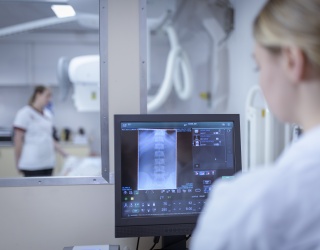
At a well-attended open forum session, speakers addressed one of the most sensitive topics in clinical imaging: errors. Rather than framing mistakes solely as individual failures, the discussion focused on understanding their causes – from cognitive biases to system pressures – and how radiologists can respond constructively.

Why diagnostic errors happen in radiology
According to Adrian Brady, radiologist at Mercy University Hospital in Cork (Ireland), errors are an unavoidable reality of medical practice. “If you never want to make an error in your radiological practice, there are ways to achieve that. The first one is stay at home and never do any work,” he said.
Radiology is inherently complex, and even well-resourced departments experience discrepancies between interpretations. Studies suggest a real-time error rate of around 3–5%, even among experienced radiologists.
Many of these mistakes are perceptual rather than analytical. Roughly two-thirds occur when a visible abnormality is simply missed, while the remaining third arise from cognitive errors where findings are misinterpreted.
Several factors contribute to these errors, including fatigue, heavy workloads, and interruptions. Visual fatigue can significantly affect performance during reporting sessions, Brady noted, while cognitive biases may influence interpretation.
Cognitive biases also play a role. Anchoring bias, for example, occurs when radiologists fixate on an early impression and interpret subsequent findings to support it. Availability bias can lead clinicians to favor diagnoses they encountered recently, even when they are unlikely.
AI as a safety net: new opportunities and new risks
Artificial intelligence is often presented as a solution to diagnostic variability. However, Daniel Pinto Dos Santos, radiologist at Mainz University Medical Center (Germany), cautioned that AI introduces new challenges alongside its benefits.
In theory, AI systems can act as a safety net by detecting findings such as lung nodules that radiologists might overlook during busy reporting sessions. Because algorithms do not tire or lose focus, they may help identify subtle abnormalities consistently.
“What is important is that we as the radiologists are ultimately in charge,” Pinto Dos Santos emphasized. European regulation reinforces this responsibility. Under the EU AI Act, radiologists remain accountable for diagnostic decisions even when AI tools are involved.
AI systems may also produce misleading output if the input data differ from those used during training. Algorithms designed for routine imaging, for example, may misinterpret unusual cases or unfamiliar clinical contexts.
Equally essential is how radiologists interact with AI recommendations. Research shows clinicians may gradually trust algorithmic suggestions, potentially adjusting their own judgment to align with the software’s output – even when the system is wrong.
When mistakes occur: communicating with patients
While identifying errors is important, how radiologists respond to them can be even more critical. Mathias Prokop, ESR first vice president and radiologist at Radboud University Medical Center (Netherlands), highlighted the importance of transparency and communication.
From a patient’s perspective, poor communication often causes more harm than the original mistake. “Usually, the breakdown of communication and loss of trust and not the substantive care as such is the most common cause of a lawsuit,” he said.
Patients typically want a clear explanation of what happened and reassurance that their concerns are taken seriously. In many countries, there is also a legal obligation to disclose medical errors.
Prokop emphasized that preparation is key when discussing a mistake. Clinicians should understand the case thoroughly, communicate honestly, and avoid speculation about causes they cannot confirm.
“When it comes to talking, I think the most important thing is don't fake it. If you fake it, you're lost immediately because people feel when you fake it,” he said. Above all, he argued, radiologists should approach such conversations with empathy and authenticity.
Building a culture of learning from errors
Ultimately, the speakers agreed that errors should not be ignored or hidden but used as opportunities for improvement. As Brady summarized, the goal is not to eliminate mistakes entirely, a near-impossible task, but to learn from them and avoid repeating them.