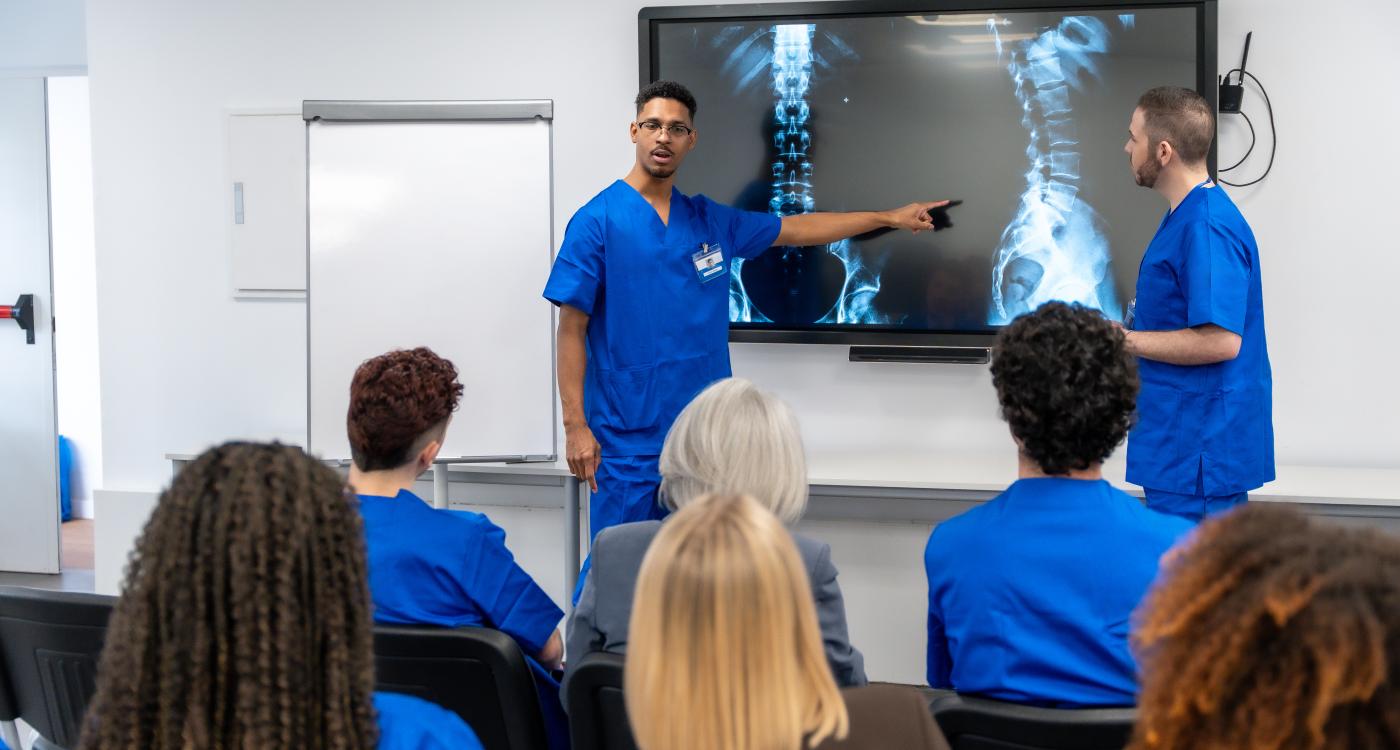
Radiology education is no longer confined to lecture halls and textbooks. From QR codes at the point of care to case discussions on Instagram and in-depth YouTube lectures, educators are increasingly using digital platforms to bring learning into everyday clinical practice.
In this article we have summarized some expert views on the topic to explore how digital tools ranging from QR codes to Instagram and YouTube are changing the way radiology knowledge is shared, retained and applied in clinical practice.
Teaching in the Flow of Work
Mohit Agarwal, Associate Professor at the Medical College of Wisconsin and founder of The Cortex Club (US), focused on how QR codes and microlearning can help bridge the gap between classroom teaching and clinical practice.
He described a situation where a resident recognized a laryngeal cancer on imaging but struggled to stage it despite previously attending a lecture on the topic. According to Agarwal, the problem was not the quality of the lecture, but the disconnect between where the knowledge was taught and where it needed to be applied.
Instead of requiring trainees to revisit lengthy lectures, Agarwal advocated for short, targeted educational resources accessible directly at the point of care through QR codes, videos, or quick-reference checklists. “We are talking about focused learning that solves a particular problem in the moment,” he said.
According to Agarwal, QR codes provide instant, mobile-friendly access to digital resources and are suited for microlearning environment when you have to deliver short pieces of information at the point of care.
However, he stressed that microlearning should complement rather than replace comprehensive teaching. “Microlearning definitely gives you information at the time, but you need to have a strong foundation through macro learning to use microlearning adequately or optimally.”
Why Cases Remain Central to Radiology Education
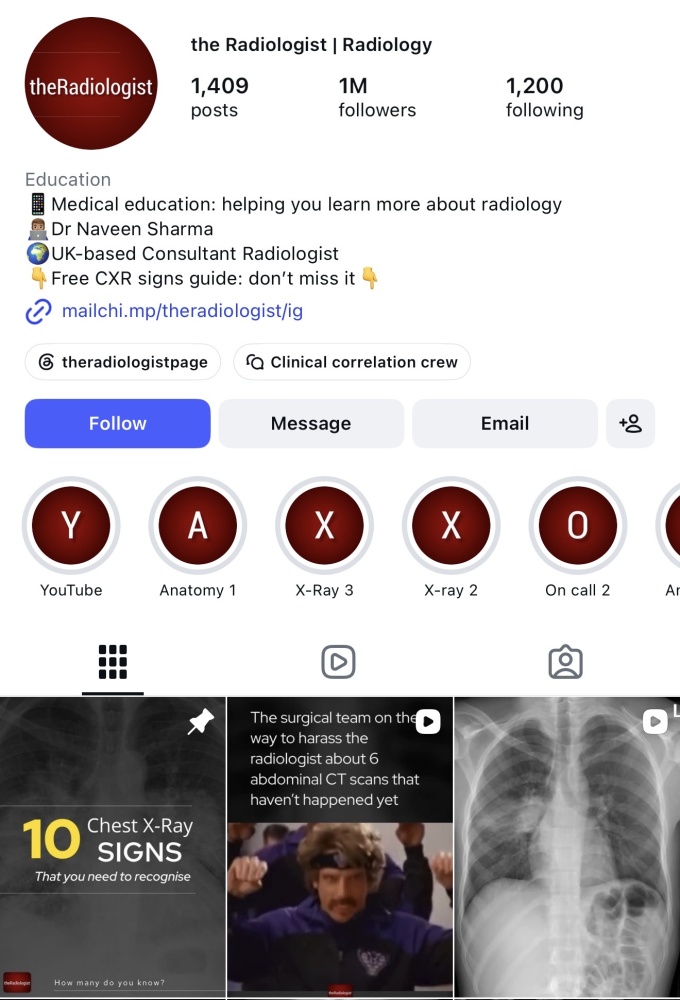
Naveen Sharma, Consultant General and Cardiothoracic Radiologist at Maidstone and Tunbridge Wells NHS Trust (UK) and founder of The Radiologist, an Instagram-based educational platform with more than 1 million followers, highlighted the importance of case-based learning in developing diagnostic reasoning skills.
According to Sharma, active case-based teaching is more effective than passive learning because it mirrors the reasoning process radiologists use in daily reporting. Instead of presenting labeled findings immediately, he recommended guiding learners step-by-step through diagnostic thinking using questions, differential diagnoses, and progressively revealed findings. “You want to try and simulate that expert reasoning that we all go through when we're reporting scans,” he said.
He also emphasized the importance of visual clarity and structured presentation, allowing learners with different experience levels to engage with the same case. “Learning happens when you force your learners to think for themselves,” he concluded.
Social Media Between Micro- and Macrolearning
For Sven Dekeyzer, neuroradiologist at UZ Gent (Belgium), social media has become an extension of traditional teaching rather than a replacement for it. “I believe to become a good radiologist, you need a massive caseload. But a massive caseload on its own won't do the trick,” he said.
According to Dekeyzer, developing expertise also requires feedback, mentorship, and continuous self-directed learning. His educational platforms combine short teaching posts on Instagram and X with longer YouTube lectures that explore neuroradiology topics in depth.
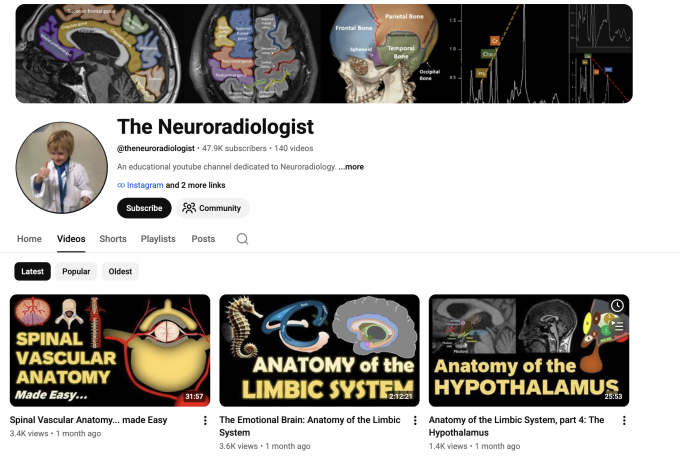
While social media can help learners retain information and revisit uncommon diagnoses, he argued that short-form content alone is insufficient for building expertise. “Microlearning alone won't do the trick,” he said. Drawing on educational psychology, Dekeyzer noted that repetition helps reinforce knowledge over time. As he put it: “Repetition is the mother of all studies.” For him, the key lies in combining short and long-form learning formats. “Microlearning feeds the algorithm while macro learning feeds the brain.”
Combining Technology with Traditional Teaching
Despite their different approaches by experts, there is a common message: digital tools should support rather than replace mentorship, structured learning, and clinical experience.
While QR codes, social media platforms and microlearning formats can make education more accessible and engaging, they are most effective when combined with case-based teaching, expert feedback and sustained study. Technology may enhance learning, but it cannot replace the human elements of education.
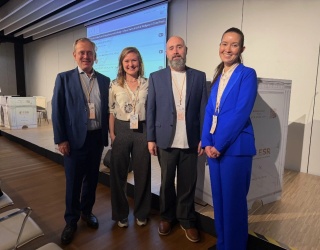
This article is based on presentations and discussions from the ECR 2026 session “Residents as teachers: effectively using new interactive teaching technologies (part 2)” including all quotations.