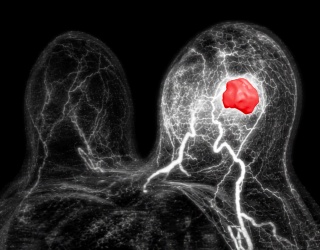
The SHERPA research consortium has initiated seven clinical studies to validate AI-based assistive technologies for minimally invasive treatments of brain aneurysms and liver tumors. The four-year project, coordinated by Philips and supported by the EU Innovative Health Initiative (IHI) and industry partners, has a total budget of EUR 21.5 million.
According to the European Institute for Biomedical Imaging Research (EIBIR), the studies will assess automated workflows that combine artificial intelligence, robotics, advanced imaging, and clinical decision support to assist interventional radiologists and interventional neuroradiologists during complex procedures.
These procedures rely heavily on CT, MR, and real-time image guidance and require high levels of expertise, making them vulnerable to workforce shortages and capacity constraints across Europe.
Addressing Staffing Shortages in Interventional Radiology
The project responds to growing concerns about limited specialist availability. The World Health Organization estimates a shortage of 600,000 physicians in the European Union by 2030, with interventional radiology among the most affected fields.
Brain aneurysm repair and tumor ablation procedures are particularly demanding because they involve precise device placement under image guidance. SHERPA aims to reduce workload pressure by automating repetitive tasks, supporting decision-making, and accelerating training for clinicians.
Clinical Studies Across Leading European Centers
The studies are being conducted at major academic hospitals, including:
- University Medical Center Utrecht (The Netherlands)
- St Antonius Hospital (The Netherlands)
- University Medical Center Hamburg-Eppendorf (Germany)
- Hôpital Bicêtre AP-HP (France)
- Hospital de la Santa Creu i Sant Pau (Spain)
Five studies focus on neurovascular interventions for brain aneurysms, while two address tumor diagnosis and treatment.
Brain Aneurysm Studies
The neurovascular program includes AI tools for detection, risk prediction, treatment planning, and follow-up:
- RADAR: AI-based aneurysm detection using CT and MR imaging
- Aneurysm@risk: Prediction of aneurysm growth and rupture risk
- ASSIST: AI-supported device selection and positioning
- INTERACT: Automated imaging optimization for procedure guidance
- SAFO: Digital remote follow-up solution for patients, enabling standardized monitoring, enhanced coordination, and seamless care across the patient pathway
Tumor Treatment Studies
Two additional studies focus on oncology procedures:
- MISTRAL: Cone-beam CT workflows for liver tumor ablation
- RHODES: Robotic-assisted versus free-hand lung biopsy
From Algorithm Development to Clinical Validation
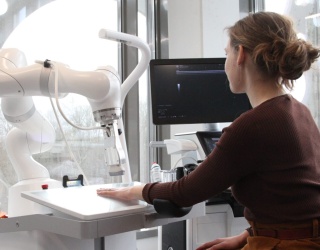
During the project’s first year, the consortium developed algorithms for aneurysm detection, patient selection for tumor ablation, treatment planning, and confirmation of procedural success. Robotic technologies were also created to improve precision and reduce procedural difficulty.
Over the next three years, the clinical studies will evaluate these tools in real-world settings, measuring outcomes such as patient experience, workflow efficiency, clinician workload, and procedural performance.
Public-Private Partnership with Broad European Reach
SHERPA brings together 16 partners from seven European countries, including medical technology companies, academic institutions, and professional societies. EIBIR leads dissemination and communication activities, while the Cardiovascular and Interventional Radiological Society of Europe (CIRSE) supports training initiatives.
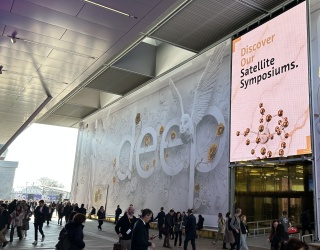
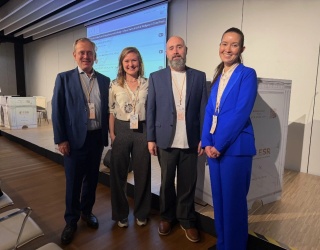
The project was featured at the European Congress of Radiology (ECR) 2026 in Vienna in a dedicated session titled “Assistive Technologies for Interventional Radiologists: Enhancing Decision-Making and Streamlining Workflow with Innovations and AI-Powered Solutions.”
Insights from the studies are expected to support wider adoption of AI-driven assistive technologies in interventional radiology and improve access to complex minimally invasive treatments.
Source: SHERPA