Generalist AI for Abdominal CT
Researchers have developed RADAR (Rapid Abdominal Diagnosis with AI and Radiology), a generalist vision-language model designed to support diagnosis from contrast-enhanced abdominal computed tomography (CT). The model was trained on more than 400,000 CT examinations and clinical reports without manual annotation.
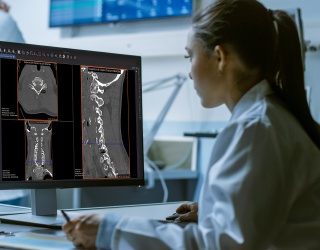
Abdominal CT presents a complex imaging challenge because it requires assessment of numerous anatomical structures and a wide range of conditions. Existing AI approaches have largely relied on supervised learning and manual annotations, which can make training labor intensive and limit the range of diseases covered.
RADAR uses a vision-language framework that decomposes CT volumes into anatomical units and aligns them with diagnostic text from clinical reports. The approach was developed to enable diagnosis without additional manual labeling.
Performance Across Findings and Centers
The researchers constructed the RAD-CT dataset from 424,911 abdominal CT examinations, comprising 15 million anatomy-wise image-text pairs. RADAR was evaluated across 18 anatomical structures and 146 imaging findings.
In a real-world internal cohort of 39,160 examinations, the model achieved an area under the receiver operating characteristic curve (AUC) of 0.913 (95% confidence interval, 0.911 to 0.915). Across eight external centers, AUCs ranged from 0.874 to 0.912.
For pathology-confirmed evaluations covering liver, pancreas, stomach, and colorectal cancers, RADAR achieved AUCs ranging from 0.891 to 0.984. In a separate cross-population cohort, the model achieved an AUC of 0.883 without fine-tuning.
Evaluation in Unfamiliar and Acute Conditions
The model was also evaluated on acute abdominal conditions that had been excluded from its initial training. RADAR achieved an AUC of 0.904 in these cases.
A reader study involving 26 radiologists from 14 centers found that RADAR outperformed most participants. When used collaboratively with the radiologists, the system increased diagnostic sensitivity by approximately 10%.
The model also generates attention maps highlighting visual cues considered relevant to its diagnostic output, which the researchers said can facilitate interpretation.
Implications for Generalist Radiology AI
RADAR was trained directly on large-scale clinical reports rather than manually annotated datasets. The study reports broad diagnostic coverage across abdominal CT and performance across multiple centers and clinical scenarios.
The findings indicate that the vision-language approach can support abdominal CT interpretation across a broad range of anatomical structures and imaging findings, while also increasing sensitivity when used as an assistive reading tool by radiologists.
Source: Science