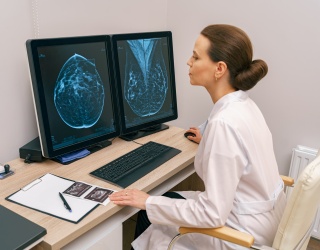
Breast imaging is moving beyond a one-size-fits-all approach. Dr. Thiemo van Nijnatten, and Dr. Joana Reis discuss dense breast screening, AI, contrast-enhanced imaging, and emerging technologies – and how closer collaboration between clinicians and industry could translate these advances into patient care.
From your respective industry and clinical perspectives, which developments are having the greatest impact on breast imaging practice in Europe?
Dr. Joana Reis: From an industry perspective, what I have noticed is a shift from a one-size-fits-all approach towards a more personalized, individualized, and risk-adapted approach.
Instead of having one modality to address the clinical needs of our patients, we can now offer additional imaging according to, for example, an individual's breast cancer risk. That is where I see a major shift, including the introduction of new contrast-enhanced modalities, whether contrast-enhanced mammography or contrast-enhanced MRI.
Dr. Thiemo van Nijnatten: I fully agree with Joana. It is interesting that, from a therapy perspective, we have always considered which medications should be offered to which women, while imaging has largely remained identical.
In recent years, we have learned that we should also move towards a more personalized screening and diagnostic approach. If someone has a mammogram showing extremely dense breasts, for example, we should consider offering supplemental contrast-enhanced breast imaging, whether MRI, abbreviated MRI or contrast-enhanced mammography.
Studies have shown that supplemental contrast-enhanced imaging can detect approximately 18 additional cancers per 1,000 women with dense breasts and a normal mammogram that we otherwise would not have detected.
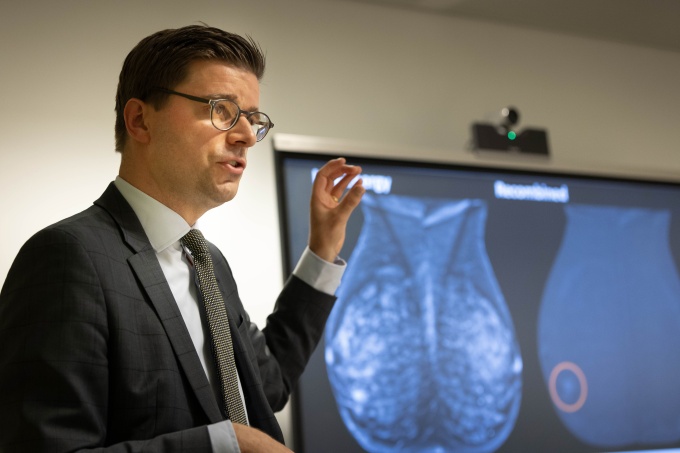
DENSE provided strong evidence for supplemental screening in women with extremely dense breasts, yet implementation across Europe remains uneven. What is preventing wider adoption?
Dr. Thiemo van Nijnatten: Quite soon after the study was published, the European Society of Breast Imaging issued a recommendation to offer supplemental breast MRI to women with extremely dense breasts on mammography.
In terms of facilities, having sufficient availability of the technique to offer it to every woman is challenging. The financial structure also needs to be established: the country has to be willing to pay for this additional imaging for this specific group of women.
In the Netherlands, we now have approval from our Ministry of Health. It is not available yet, but it has been approved. and we are now preparing for implementation.
Other countries have already implemented it because they saw the considerable potential benefit. One difference is that we have a nationwide screening program, while other countries may have regional opportunities to adapt their screening programs.
Are European countries that have been slower to implement these recommendations now moving in that direction?
Dr. Thiemo van Nijnatten: They are looking for alternatives. The BRAID trial from the UK, for instance, has shown that we do need contrast. But if MRI or abbreviated MRI is not sufficiently available, contrast-enhanced mammography is an excellent alternative for supplemental imaging.
It was also compared in that study with automated breast ultrasound, which had a substantially lower cancer-detection rate than either contrast-enhanced mammography or abbreviated MRI.
Does the evidence from MASAI begin to challenge Europe's traditional double-reading model, and what further evidence is needed before practice changes?
Dr. Thiemo van Nijnatten: For AI screening, one of the questions has always been: What is the accuracy of AI? Is it non-inferior to double human reading, which is usually the approach within a screening program?
That has been demonstrated by MASAI. But I think what is even more important is the consistency and the follow-up data afterward. For instance, the interval cancer detection rate has also been shown to be at least non-inferior to what was demonstrated before.
I think the evidence on longer-term outcomes is now beginning to emerge, and that is very exciting.
Dr. Joana Reis: We have mentioned MASAI, which is very focused on screening and substituting the second reader. But AI can also play a role in prioritization, for example, or in imaging quality.
There are algorithms nowadays that can support breast imaging in different ways beyond screening. But robust evidence and real-world data are still needed.
Promising technologies do not always translate successfully into clinical practice. How should clinicians and industry define meaningful innovation, and ensure that new technologies address real clinical needs?
Dr. Joana Reis: I would say that innovation makes sense if we link it to a real unmet need.
Clinical practice and industry can work together to identify what is really needed for our patients and for a better patient-care pathway. We should also continue supporting each other in generating clinical evidence. We still need data such as DENSE and the ongoing DENSE-2 trial.
We need to continue generating data together with clinicians and continue collaborating on education and awareness.
Dr. Thiemo van Nijnatten: I can only echo those comments. It remains essential that industry, radiology, and the wider clinical community continue collaborating.
If I am a radiologist and find something new that produces beautiful images, but the clinician says, "Well, it doesn't change my treatment pathway," then it doesn't make any sense.
We need to continue communicating with each other to determine the most important and urgent needs that should be explored further and considered for implementation.
Which emerging developments do you think could substantially improve breast imaging and patient care over the next few years?
Dr. Thiemo van Nijnatten: As both a breast radiologist and nuclear medicine physician, I see very exciting developments in the types of PET imaging we can offer to identify and stage patients – for example, determining whether metastatic disease is present.
There are also developments in breast oncology around radioligand therapy. We cannot currently offer this in the way it is being used in prostate cancer, where we are now able to treat patients and see tumors shrink not only locally but also at distant metastatic sites.
I expect that over the next few years this is also going to have a major impact in the breast cancer field.
Dr. Joana Reis: I would add another development, following new recommendations to use the lowest amount of gadolinium in MRI contrast agents possible.
If we can implement next-generation, high-relaxivity, low-dose MRI contrast media, this could be particularly relevant for patients in breast imaging who undergo repeated examinations over the course of a year. I think using these next-generation gadolinium-based contrast agents more frequently will become increasingly important.
Dr. Thiemo van Nijnatten: That also aligns with sustainability: using only the amount of contrast agent that is needed is becoming increasingly important.
So, is breast imaging itself taking on a broader role in the patient pathway?
Dr. Joana Reis: That is one thing I have noticed over the last few years. Previously, breast imaging was very focused on screening and mammography.
Nowadays, I think breast imaging is increasingly seen as an end-to-end solution. We can offer screening and detection, we can diagnose, and we can also be part of treatment planning, staging, and monitoring. So, breast imaging really has a role throughout the end-to-end patient care pathway.