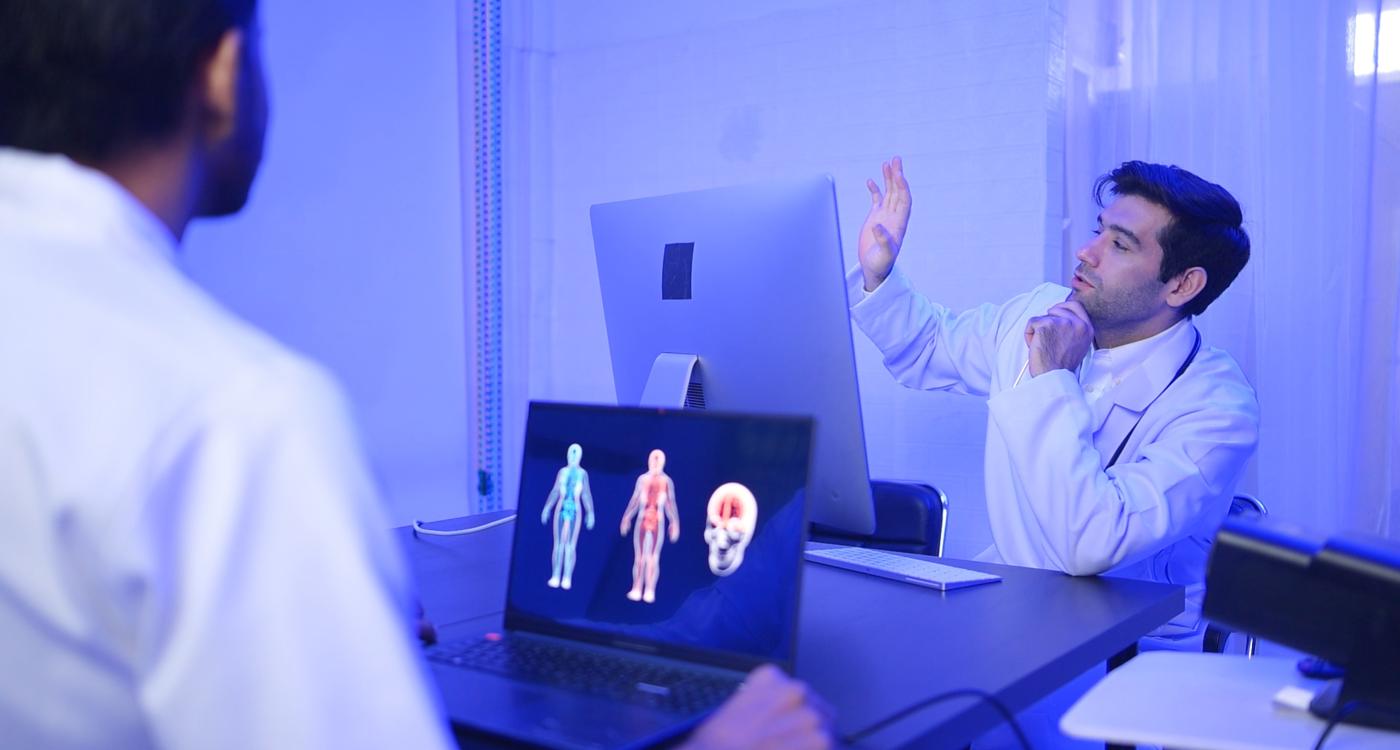
Digital twins are increasingly moving from experimental concepts into practical tools for imaging departments. In radiology, these virtual models can represent patients, organs, imaging systems, or even entire workflows. Their strength lies in simulation: by testing scenarios digitally before decisions are made in real life, departments can improve diagnostic precision, operational planning, and clinical safety.
As digital twin applications expand, five areas stand out where imaging departments are beginning to see measurable relevance.
1. Virtual Patient Models for Personalized Diagnosis
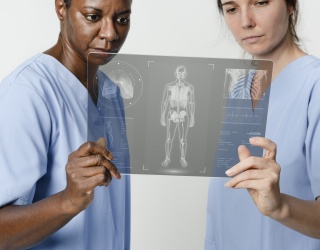
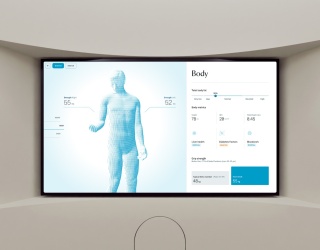
One of the most discussed clinical applications of digital twins is the creation of patient-specific virtual models. These “human digital twins” combine imaging, biomarkers, and clinical history into a continuously updated representation of an individual patient. In radiology, this opens new pathways for earlier diagnosis, risk stratification, and precision monitoring, especially in complex disease profiles where imaging findings must be interpreted in context.
A 2025 review published in the National Library of Medicine emphasizes that digital twins can act as dynamic clinical decision-support platforms. By enabling real-time tracking of disease progression and virtual testing of treatment strategies, patient-level digital twins support more individualized care pathways while reducing procedural risks and improving long-term monitoring, making them a promising approach toward patient-centered, data-driven, and truly personalized care.
2. Simulation of Disease Progression
Beyond static diagnosis, digital twins are increasingly used to simulate how disease may evolve over time. Instead of relying only on snapshots from single exams, disease-progression twins model trajectories. For example, how cardiac conditions, neurodegeneration, or tumor growth may develop under different clinical scenarios.
A 2025 article in the Journal of Imaging Informatics in Medicine highlights the growing role of cancer patient digital twins in precision oncology. By using radiologic imaging as the observational foundation, these models can represent a tumor’s behavior virtually, enabling clinicians to explore treatment strategies in silico and optimize therapy combinations, dosing, and sequencing. Digital twins may also complement traditional tumor boards by supporting more individualized predictions of disease progression and response.
3. Therapy and Intervention Planning
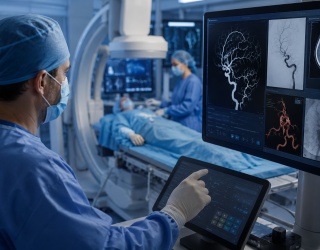
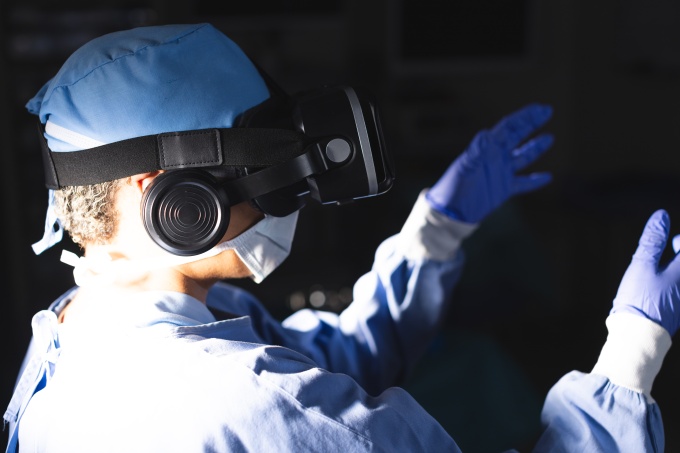
Digital twins are also gaining importance as tools for therapy planning and intervention simulation. In oncology, surgery, and interventional radiology, virtual patient models can help evaluate treatment responses before therapy begins. Instead of relying solely on population-level evidence, digital twins enable strategies to be explored in patient-specific simulations, supporting more individualized decision-making in complex cases.
A 2025 paper published in European Urology Oncology showcases that digital twins allow clinicians to work with a “virtual patient” before treating the real one by simulating multiple therapeutic approaches, including surgery. The combination of imaging-based 3D anatomical models with digital twin technology and virtual reality environments is emerging as a promising avenue for tailoring intervention planning. Built on patient-specific anatomy, these systems can model tissue behavior and instrument interaction, enabling surgeons to examine individual structures in detail, inform intraoperative decisions, and rehearse procedures virtually before intervention.
4. Imaging System Optimization and Quality Assurance
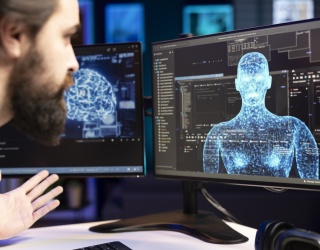
Not all digital twins are patient-based. Device-level digital twins replicate imaging systems such as CT or MRI scanners, enabling continuous monitoring of performance and early detection of calibration drift or technical inefficiencies. These applications are particularly relevant for quality assurance, dose governance, and uptime optimization.
Keeping CT and MRI systems running reliably remains one of radiology’s most important operational challenges. A system-level digital twin provides remote, real-time analysis, monitoring, and maintenance, helping departments detect performance issues such as detector calibration shifts or radiofrequency coil degradation before they lead to disruptions. Beyond operational oversight, digital twins can also support solution testing and optimization in virtual environments, reducing the need for physical prototyping and accelerating device refinement.
A 2025 article in the Journal of Imaging Informatics in Medicine explains how system-level digital twins are increasingly being applied to condition monitoring, maintenance planning, and quality assurance frameworks in CT and MRI environments.
5. Predictive Decision Support in Clinical Workflows
At the departmental level, digital twins can mirror entire radiology workflows, from scheduling and modality usage to reporting processes. Linking modality data with RIS/PACS logs and operational performance metrics helps identify bottlenecks, anticipate capacity constraints, and guide resource allocation.
A 2025 Bioengineering study demonstrates how workflow-level digital twins can generate measurable operational improvements in MRI services. The authors developed a digital twin of the MRI scheduling environment combined with a reinforcement learning optimization model that dynamically manages patient waitlists based on clinical urgency. In a high-complexity hospital setting, the framework increased scanner utilization by 14.5% and reduced average waiting times by 44.8%, while also improving fairness across clinical priority levels. Such approaches highlight the growing potential of digital twins to support more efficient and equitable radiology operations.
Digital Twins as a Strategic Layer in Radiology
Across these five areas, digital twins are beginning to evolve from theoretical models into operational instruments for imaging departments. Whether supporting personalized diagnosis, simulating disease pathways, improving therapy planning, supporting quality assurance, or optimizing workflow decisions, the technology signals a broader shift: radiology is moving toward continuously learning systems that connect clinical insight with predictive analytics.
While many applications remain in development, current evidence suggests that radiology is becoming a key environment for digital twin adoption. For imaging leaders, the question is no longer whether digital twins will enter departmental practice, but which applications will deliver real value first.
Learn more about digital twin applications in radiology in DI Europe’s Digital Twin series:
Digital Twin Series