FDA Approves Ambelvist for Contrast-Enhanced MRI
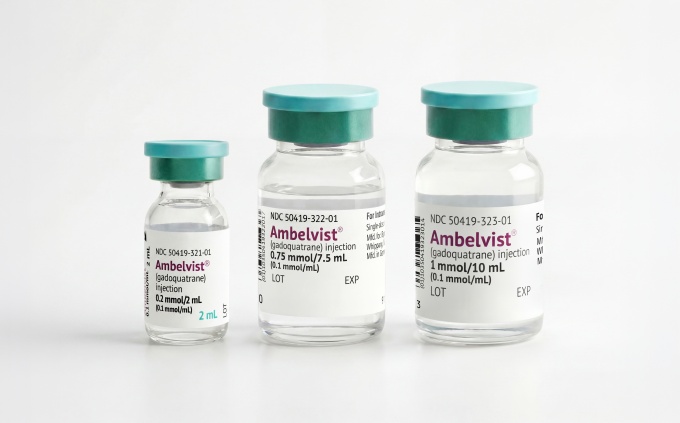
Bayer has received U.S. Food and Drug Administration (FDA) approval for Ambelvist™ (gadoquatrane), a macrocyclic gadolinium-based contrast agent (GBCA) indicated for contrast-enhanced magnetic resonance imaging (MRI).
According to Bayer, the agent is approved for detecting and visualizing lesions with abnormal vascularity in both central nervous system (CNS) and non-CNS body regions in adult and pediatric patients, including term neonates.
The company stated that gadoquatrane is a next-generation macrocyclic GBCA featuring a tetrameric structure and high relaxivity, a characteristic associated with signal enhancement in MRI.
Lowest-Dose Macrocyclic GBCA Approved in the U.S.
With FDA approval, Ambelvist becomes the lowest-dose macrocyclic GBCA approved in the United States.
The recommended dose is 0.01 mmol/kg actual body weight, corresponding to 0.04 mmol gadolinium/kg body weight. According to Bayer, this represents:
- 60% less gadolinium compared with macrocyclic GBCAs administered at 0.1 mmol Gd/kg body weight
- 20% less gadolinium compared with gadopiclenol administered at 0.05 mmol Gd/kg body weight
Bayer noted that the approval comes amid growing demand for diagnostic imaging, driven in part by increasing rates of chronic diseases such as cancer and cardiovascular disease. For patients requiring repeated MRI examinations, including those with neurological disorders, spinal conditions, multiple sclerosis, or cancer, reducing cumulative gadolinium exposure remains an important consideration.
“I often rely on contrast-enhanced MRI exams to inform clinical decision making,” said Dr. Christopher Hancock, Director of Neuroradiology at HALO Diagnostics Desert Cities, USA, and an investigator for the QUANTI clinical studies. “With this approval, we now have an additional option that can help deliver contrast-enhanced images at the lowest macrocyclic GBCA dose, reducing gadolinium exposure while preserving the clinical information we often need.”
Approval Supported by Phase III QUANTI Studies
The FDA decision was supported by data from Bayer’s global Phase III QUANTI clinical development program, which evaluated the efficacy and safety of gadoquatrane in adult and pediatric patients undergoing contrast-enhanced MRI.
According to Bayer, key findings included:
- Improved lesion visualization when pre-contrast and post-contrast MRI images were combined, compared with pre-contrast imaging alone
- Visualization scores and lesion detection rates comparable to macrocyclic GBCAs administered at 0.1 mmol Gd/kg body weight
- Pediatric data from 93 patients aged 28 days to less than 18 years, supporting use in children
The company reported that use in pediatric patients is supported by both adult clinical data and additional pharmacokinetic and safety findings from the pediatric study.

Global Regulatory Expansion Continues
Gadoquatrane received its first regulatory approval in Japan in March 2026 under the Ambelvist brand name. Bayer has also submitted applications for marketing authorization in additional regions, including the European Union and China.
“Bayer is a leader in radiology and has played a pioneering role in MRI contrast agent development, having launched the first gadolinium-based contrast agent in 1988,” said Dr. Konstanze Diefenbach, Head of Radiology R&D at Bayer’s Pharmaceuticals Division.“With gadoquatrane – a next generation high-relaxivity, low-dose MRI contrast agent demonstrating high stability – we continue driving advances for patients and their treating physicians. Reducing patients’ lifetime exposure to gadolinium is an important consideration and reflects the growing clinical guidance to use the lowest gadolinium dose necessary to adequately image patients.”
Source: Bayer