Hybrid-powered mobile CT for community lung screening
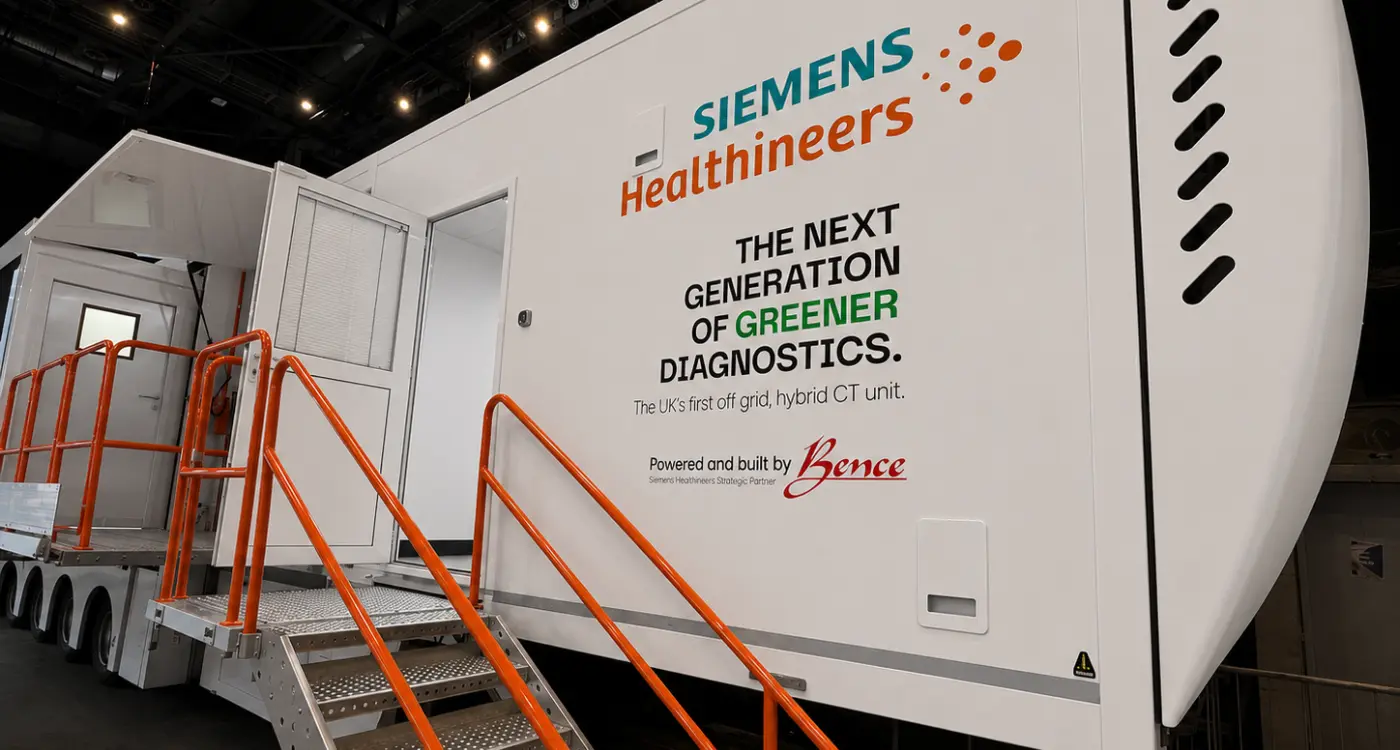
Siemens Healthineers and WH Bence have announced the development of the UK's first hybrid-powered mobile CT unit for lung cancer screening. According to the companies, the system is designed to support the growing demand for targeted lung health checks while enabling more flexible deployment of mobile imaging services in community and remote locations.
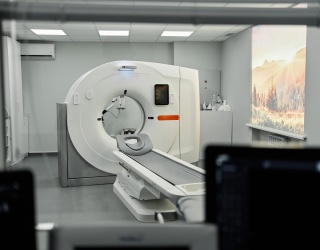
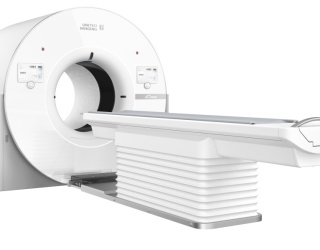
Built around the SOMATOM go.Up CT system from Siemens Healthineers, the mobile unit is intended to address operational challenges associated with delivering CT imaging outside traditional hospital settings.
Unlike conventional mobile CT units that rely primarily on external generators or high-capacity site power, the hybrid-powered design combines lithium-ion batteries, a 100 kW uninterruptible power supply (UPS), low-amperage trickle charging, and roof-mounted solar panels. According to Siemens Healthineers, this reduces infrastructure requirements and reliance on generator-based power.
The company states that the unit can operate for up to three full screening days without external charging, allowing deployment in locations where access to conventional power infrastructure may be limited. The design is also intended to provide greater operational resilience during local power disruptions.
Supporting targeted lung health checks
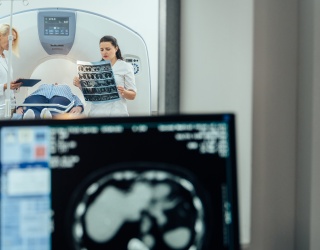
According to Siemens Healthineers, community-based lung cancer screening is playing an increasing role in improving access to earlier diagnosis. Similar to established mobile breast screening programs in the UK, targeted lung health checks bring CT imaging closer to local communities, particularly where travel or accessibility may limit participation.
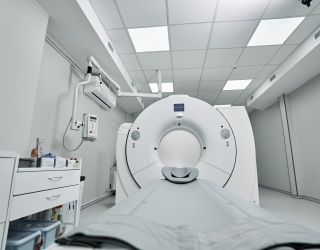
At the center of the mobile unit is the compact SOMATOM go.Up 64-slice CT scanner. The system incorporates Tin Filter technology to support low-dose imaging protocols for lung cancer screening, where dose efficiency is an important consideration.
Siemens Healthineers also states that the compact footprint and reduced infrastructure requirements provide greater flexibility for organizations operating mobile imaging services across multiple locations.
Professor Richard Booton, Consultant Respiratory Physician at Manchester University NHS Foundation Trust, said:
"We have worked closely with Siemens Healthineers for many years across our lung cancer screening programme, using mobile CT technology to help bring screening closer to local communities. A hybrid-powered solution like this offers increased flexibility, enabling services to be delivered in a wider range of locations without many of the logistical challenges traditionally associated with mobile imaging infrastructure, while also supporting efforts to reduce emissions through a lower reliance on generator-based power. As lung screening continues to expand, innovations that support accessibility and operational resilience will become increasingly important."
Carl Smith, Business Area Lead for CT at Siemens Healthineers Great Britain & Ireland, added: "As lung screening programmes continue to expand, there is a growing focus on how imaging services can be delivered closer to patients and more sustainably. This collaboration with WH Bence was driven by the need to address the practical challenges of mobile CT deployment - including power infrastructure, logistics and resilience - while maintaining high-quality imaging capability."
Source: Siemens Healthineers