Integrated Imaging Workflow for BCI Care
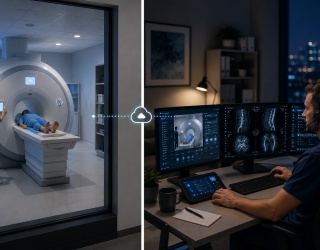
Paradromics and Siemens Healthineers are developing an integrated imaging workflow for brain-computer interface (BCI) care. The collaboration covers:
- patient assessment,
- neural target identification,
- surgical planning and
- implant localization.
The planned workflow will span the BCI care pathway. It will support patient candidacy assessment, intraoperative navigation and post-implant evaluation. It will also include neural validation of functional imaging findings and outcomes assessment.
Brain regions responsible for speech, language, movement, vision, hearing and cognition vary between individuals. Accurately mapping these areas before implantation is therefore important. The companies aim to use patient-specific anatomical and functional information to help identify suitable neural targets. BCIs are advancing from academic proof-of-concept research toward clinical systems. These technologies aim to restore functions such as communication and computer control. The collaboration focuses on integrating imaging into the preparation and assessment of BCI implants.
Combining Multiple Imaging Modalities
The planned platform will combine:
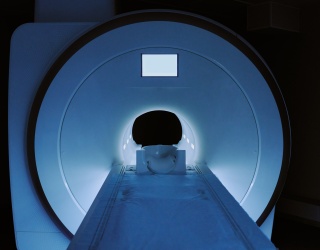
- structural magnetic resonance imaging (MRI),
- functional MRI,
- vascular imaging and
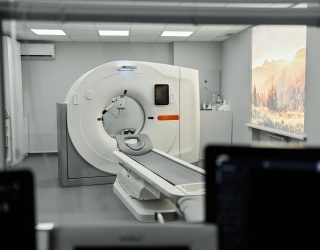
- computed tomography (CT).
These modalities will support assessments of brain anatomy and function. The workflow is also intended to help clinical teams plan surgical trajectories and avoid critical vascular structures. It will support the identification of relevant brain regions and localization of implanted BCI components.
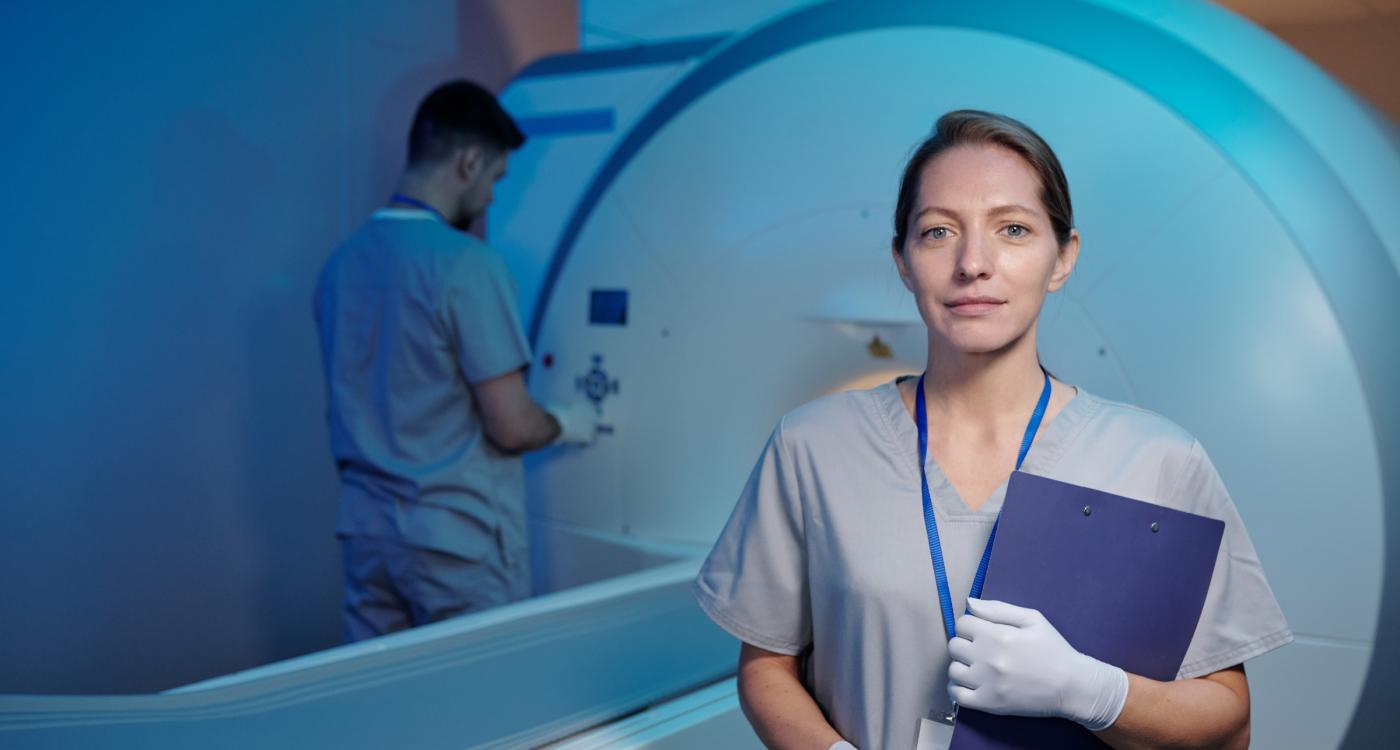
The companies will build on standard imaging protocols already used by Paradromics on Siemens Healthineers scanners. The planned imaging package will cover image acquisition, co-registration and processing. It will also include outputs for surgical navigation and increasingly automated analysis.
Supporting Surgical Planning and Follow-Up
The partners aim to develop a workflow that can be deployed efficiently across medical centers using Siemens Healthineers imaging systems. The approach will connect preoperative assessment with intraoperative navigation and post-implant evaluation.
"Building the best hardware is only part of the story. BCI performance begins before an implant ever reaches the brain. The ability to understand each patient's individual anatomy and functional organization can help us identify the right neural target and place our technology with greater accuracy. Working with Siemens Healthineers will help us streamline this process prior to surgery, so that patients get the best possible outcome," said Matt Angle, Ph.D., founder and CEO of Paradromics.
The collaboration aims to bring multiple imaging modalities and processing steps into one coordinated workflow. The intended application is to support patient-specific neural targeting, surgical planning and post-implant assessment.
Source: Paradromics Inc.