High-Speed Detectors for Modern CT Platforms
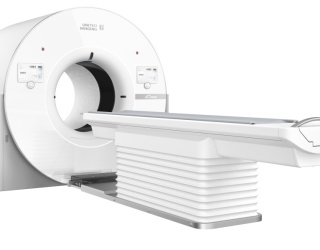
Detection Technology Plc has unveiled its X-ACE HS detector family, designed for next-generation medical computed tomography (CT) systems. Announced on March 3, 2026, the new detectors target system manufacturers developing higher-performance scanners with faster acquisition, expanded anatomical coverage, and lower radiation dose.
The X-ACE HS family supports slice configurations up to 64 slices and is engineered to reduce integration complexity while enabling scalable system design across value-to-premium CT platforms.
“With the introduction of the X-ACE HS family, we reinforce our position as a trusted provider of off-the-shelf CT detector solutions for value-to-premium imaging systems,” said Katja Lefèvre, Product Manager at Detection Technology. “We provide standardized, ready-to-integrate modules across multiple slice configurations, aligned with future CT trends including static CT, photon-counting CT and multi-source architectures. This enables our customers to innovate faster, reduce development risk and build scalable next-generation imaging platforms.”
Faster Scanning and Expanded Coverage
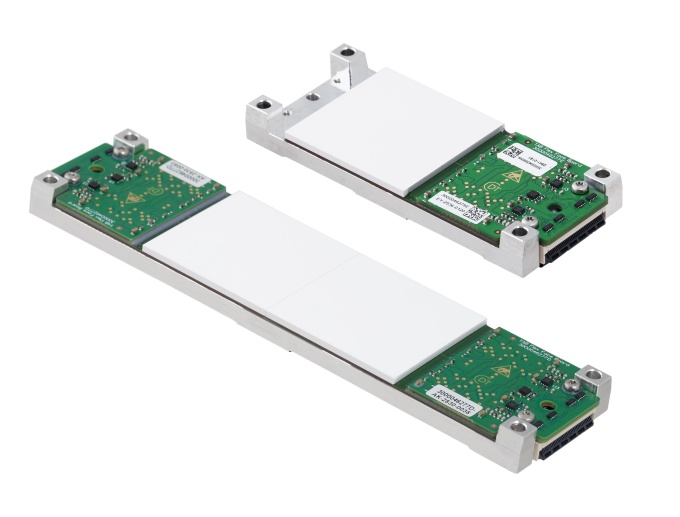
The detector family includes two modules — X-ACE 32 HS and X-ACE 64 HS — along with a dedicated data acquisition system (DAS). Designed for rotating CT systems, the platform enables integration times as low as 50 microseconds, supporting high-speed gantry rotation and static CT imaging.
Extended anatomical Z-coverage allows larger regions to be captured per rotation:
- 20 mm coverage with the 32-slice detector
- 40 mm coverage with the 64-slice detector
This wider coverage can reduce scan time, limit motion artifacts, and increase patient throughput — particularly relevant for emergency and trauma imaging workflows.
Low-Dose Imaging with Improved Signal Quality
At the core of the system is a medical-grade GOS scintillator paired with backside-illuminated photodiode technology. According to the company, this configuration reduces detector noise by approximately 60 percent compared to the previous platform, improving signal-to-noise ratio and supporting high image quality at lower radiation dose.
A 24-bit high-speed analog-to-digital converter enables stable signal processing across a wide dynamic range, while maintaining low power consumption:
- Below 1.5 W for the 32 HS module
- Below 3 W for the 64 HS module
Low power requirements simplify gantry thermal management and support compact CT system design.
Modular Architecture and Integration Platform
The detectors are available either as stand-alone modules or as part of the AIDA platform, Detection Technology’s integrated CT detector subsystem. The platform combines hardware, software libraries, synchronized readout, and high-bandwidth communication up to 10 Gbps, reducing engineering effort and accelerating development timelines.
Additional design features include consistent module width for platform reuse, simplified electrical interfaces, and an aluminum bracket with anti-scatter grid to improve mechanical stability and alignment precision.
Beyond conventional rotating CT, the system also supports emerging static and stationary CT architectures. Tileable detector modules and synchronized data capture enable scalable multi-detector arrays for advanced imaging configurations.
The X-ACE 32 HS and X-ACE 64 HS modules are commercially available, and deliveries have begun. Detection Technology presented the X-ACE HS detector family and its AIDA subsystem at the European Congress of Radiology (ECR) 2026 in Vienna from March 4-8.
Source: Detection Technology