Philips Expands CT and Radiation Therapy Portfolio with Rembra Platform
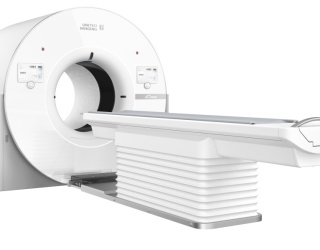
Royal Philips has announced U.S. FDA 510(k) clearance for its Rembra platform of CT systems, including Rembra CT, Rembra RT, and Areta RT. According to Philips, the newly cleared systems are designed to support high-throughput imaging, radiation therapy planning, and connected clinical workflows across diagnostic radiology and oncology care.
The company stated that the platform is intended to help healthcare providers address increasing imaging volumes and rising clinical complexity while maintaining imaging quality and workflow efficiency.
CT Imaging Designed for High-Volume Clinical Environments
Rembra CT is designed for use in emergency departments, critical care, and interventional imaging settings. Philips noted that the system features an 85 cm bore and supports high-throughput imaging workflows with capacity for up to 270 exams per day, based on throughput testing under typical clinical conditions.
The system combines advanced acquisition and reconstruction technologies to support rapid image generation and diagnostic decision-making in time-sensitive environments.
“As healthcare systems manage increasing demand and complexity, imaging plays a critical role in enabling timely and informed clinical decisions,” said Dan Xu, Business Leader of CT at Philips. “With the Rembra platform, we are redefining what clinicians can expect from CT, combining speed, scalability, and precision to expand access to high-quality imaging while supporting confident diagnosis and highly accurate treatment planning.”
Radiation Therapy Planning
The Rembra RT and Areta RT systems extend the platform into radiation oncology workflows. According to Philips, the systems are designed to support:
- Radiation therapy simulation and planning
- 4DCT imaging capabilities
- High-fidelity imaging for tumor targeting
- Extended field-of-view imaging for treatment preparation
The systems include an 85 cm extended field of view (EFOV) intended for radiation therapy planning and simulation workflows.
Philips stated that the solutions aim to improve workflow consistency and support more precise targeting during cancer treatment planning while helping protect healthy tissue.
Connected Imaging Across the Cancer Care Pathway
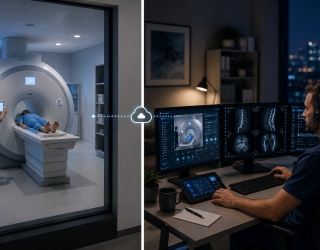
The Rembra platform is positioned as a connected CT ecosystem spanning diagnostic imaging and radiation therapy. By integrating imaging and therapy workflows, Philips aims to support coordinated patient care from initial diagnosis through treatment planning.
The company noted that the systems are designed to improve:
- Imaging workflow efficiency
- Cross-departmental connectivity
- High-volume imaging operations
- Consistency across diagnostic and therapy environments
The FDA clearances further expand Philips’ CT portfolio and reflect the company’s focus on integrating advanced imaging technologies with intelligent connected workflow solutions.
Focus on Scalability and Workflow Efficiency
As imaging demand continues to increase globally, healthcare providers are seeking scalable imaging platforms that can support operational efficiency while maintaining diagnostic confidence.
Philips stated that the Rembra systems were developed to address the evolving requirements of modern imaging environments by combining diagnostic imaging and radiation therapy planning capabilities within a unified platform.
Source: Philips