Global research network expands
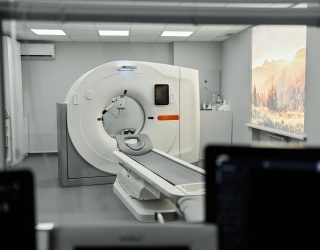
GE HealthCare has expanded its global clinical and research collaborations for Photonova Spectra, its next-generation photon-counting CT system. Seven academic hospitals and research institutions across North America, Europe and Asia will evaluate the technology in different clinical settings, focusing on clinical applications, quantitative imaging and diagnostic capabilities.
The announcement follows Photonova Spectra's CE Mark, U.S. FDA 510(k) clearance and regulatory approval from Japan's Pharmaceuticals and Medical Devices Agency. The collaborations are intended to generate clinical and technical evidence, refine imaging protocols and further investigate the system's potential applications.
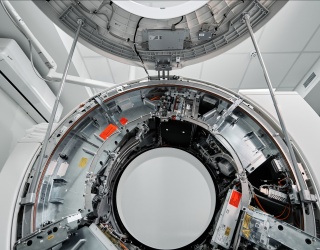
Photonova Spectra is powered by GE HealthCare's proprietary Deep Silicon detector technology. The system combines ultra-high definition (UHD) and spectral imaging in a one-scan workflow, bringing together high spatial resolution and material characterization capabilities. According to the company, these features create opportunities for quantitative imaging, tissue characterization and spectral biomarker research.
European institutions focus on cardiovascular imaging
Among the institutions joining the expanded research network is Centro Cardiologico Monzino IRCCS in Milan, Italy. Researchers will assess the system in cardiovascular imaging, with a focus on quantitative assessment, tissue characterization and workflow considerations relevant to cardiac imaging.
Universitätsspital Zürich in Switzerland will investigate Photonova Spectra for coronary CT angiography (CCTA). Its Department of Nuclear Medicine will examine how radiation dose can be optimized while maintaining diagnostic performance. The collaboration will also explore imaging protocols, applications and workflow.
UZ Brussel and Vrije Universiteit Brussel in Belgium are continuing their evaluation of the system's cardiac imaging capabilities, including coronary assessment and functional analysis. The research also aims to generate clinical evidence and refine protocols for routine cardiovascular care.
At Rigshospitalet in Copenhagen, Denmark, researchers are investigating broader clinical applications, including pediatric and low-dose imaging, tissue characterization and the use of spectral information in complex clinical cases.
Research collaborations across North America and Asia
In Japan, Keio University Hospital in Tokyo will explore quantitative and spectral imaging techniques and emerging clinical applications to assess potential future research and clinical uses.
The University of Wisconsin–Madison has renewed its collaboration with GE HealthCare. Building on earlier investigations, researchers will examine imaging protocols, quantitative performance and technical measures of image quality to further characterize the system.
Stanford Medicine in California has expanded its collaboration to include additional technical and human-subject studies. Its multidisciplinary research team will investigate reconstruction methods, image presentation workflows and disease-specific applications, including ultra-high-resolution structural visualization, tissue characterization and potential new imaging biomarkers.
Findings to inform future system development
Across the seven institutions, research teams will assess image quality, spectral performance, workflow efficiency and diagnostic utility. GE HealthCare engineers, scientists and product specialists will work alongside the participating institutions to incorporate scientific findings and clinical experience into future product enhancements.
The expanded network is intended to support further evaluation of Deep Silicon photon-counting CT technology and inform the ongoing development of Photonova Spectra, while contributing to research into quantitative imaging and spectral CT applications.
Source: GE HealthCare