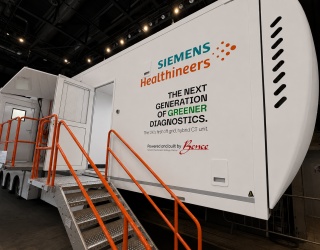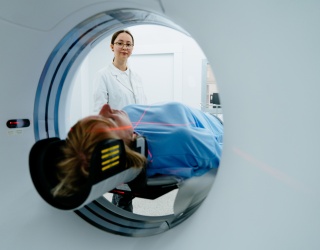
The University of Arkansas for Medical Sciences (UAMS) Winthrop P. Rockefeller Cancer Institute has deployed two of three planned mobile lung cancer screening coaches, bringing low-dose computed tomography (CT) screening to rural and medically underserved communities across Arkansas. The initiative is supported by a $4 million appropriation administered by the U.S. Department of Health and Human Services Health Resources and Services Administration.
Mobile CT Units Target Underserved Communities
The program aims to expand access to lung cancer screening in a state with the fifth-highest lung cancer mortality rate and the third-highest cigarette smoking rate in the United States. Lung cancer causes approximately 2,000 deaths annually in Arkansas, according to UAMS.
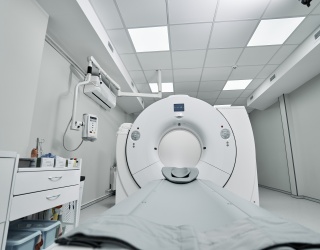
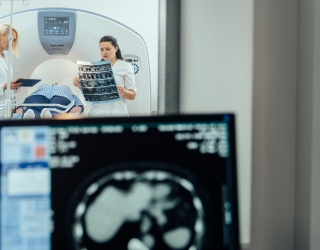
Each mobile coach is equipped with a Philips Incisive CT 5100 scanner. The units feature battery and solar-power systems and are designed for mobile use in rural communities.
Screening Services and Patient Support
In addition to low-dose CT screening, patients will receive tobacco cessation counseling and resources. Cancer Institute employees will coordinate eligibility assessments, insurance verification, and follow-up care to provide diagnostic support when needed.
Under Arkansas Act 390, which took effect January 1 2026, Medicaid and commercial insurance plans are required to cover lung cancer screenings for eligible individuals. The screening is recommended for adults ages 50 to 80 who currently smoke or quit within the past 15 years and have a smoking history of one pack a day for 20 years. Other listed risk factors include a family history of lung cancer, radon or asbestos exposure, and chronic obstructive pulmonary disease (COPD).
Deployment and Program Evaluation
UAMS will use statewide maps of lung cancer incidence and mortality to prioritize areas for mobile screening. The Cancer Institute plans to evaluate the program by tracking screening participation, early-stage detection rates, and reductions in late-stage diagnoses.
The mobile lung cancer initiative builds on UAMS's experience with its MammoVan, which has provided breast cancer screening across Arkansas for more than 16 years. UAMS has launched a second MammoVan and plans to deploy a third to further expand access to breast cancer screening.
Once fully implemented, the Cancer Institute's mobile cancer screening fleet will comprise six vans, which UAMS says will make it the largest such fleet in the United States. The program combines mobile CT screening, tobacco cessation support, and coordinated follow-up care to extend screening services to communities with limited access to hospital-based imaging.