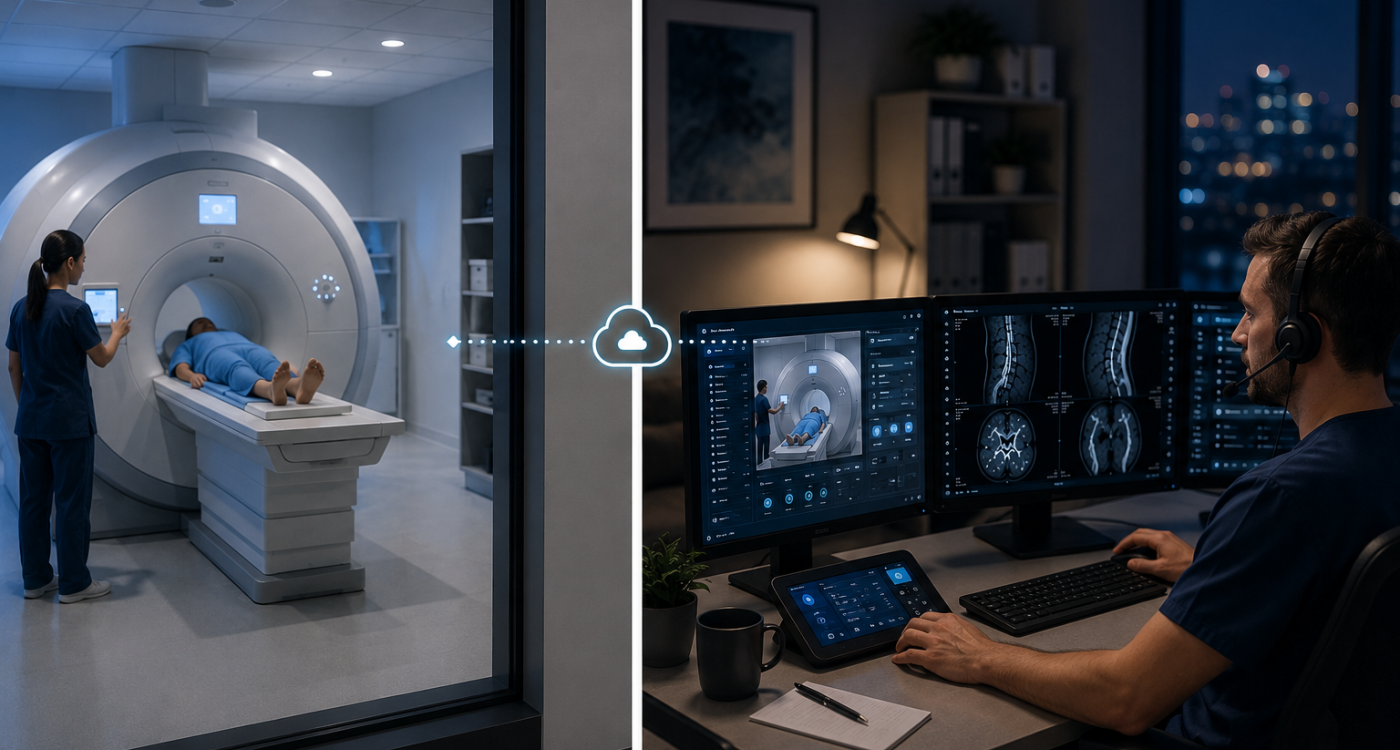
Persistent shortages of MRI technologists are driving rapid interest in remote MR scanning. By allowing technologists to operate MRI systems from a different location than the patient, healthcare providers can expand access to specialist expertise, improve scanner utilization, and support facilities struggling to recruit experienced staff. Yet as remote MR evolves from a staffing solution into a new clinical model, experts argue that technology is no longer the biggest challenge. The next step is establishing the governance needed to operate it safely.
The problem: workforce shortages are accelerating remote MR adoption
Remote MR scanning has emerged as one response to growing shortages of MRI technologists in many regions. Rather than requiring experienced personnel at every scanner, remote operation enables specialists to support multiple sites while helping improve access to complex MRI examinations and reducing operational bottlenecks.
However, remote scanning fundamentally changes the traditional MRI workflow. The technologist operating the scanner is no longer physically present with the patient, meaning responsibilities that were previously performed by one person must now be distributed across remote and on-site personnel.
As remote MR has evolved, different approaches to safety oversight and operational workflows have emerged. Experts therefore argue that common standards are now needed to ensure consistent patient safety and accountability across institutions.
The risk: safety, workflow, and legal responsibilities become more complex
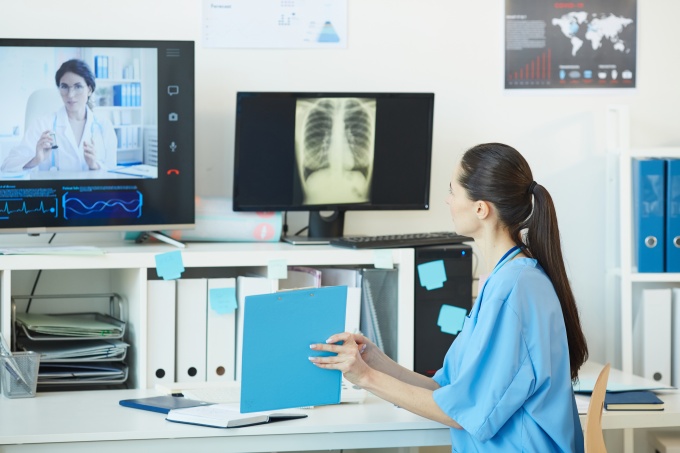
While remote MR offers clear operational advantages, it also creates new challenges for patient safety, communication, and medicolegal responsibility.
Without clearly defined responsibilities, uncertainty over who is responsible for individual safety-critical tasks can increase clinical risk. Experts therefore recommend assigning responsibilities explicitly before every examination and documenting communication between remote and on-site personnel throughout the scanning process.
As Emanuel Kanal, Professor of Radiology and Neuroradiology at the University of Pittsburgh Medical Center (US), explained, “The second you introduce the concept of remote MR scanning, absolute clarity becomes required and that means contemporaneous real-time written documentation of all communications between the remote MR scanner and the MRST on-site executing some of those orders.”
Clear documentation of instructions and their execution can reduce misunderstandings while creating accountability if complications occur. Experts also emphasize that contractual agreements between institutions and remote providers do not remove professional responsibility toward the patient. Instead, liability may be shared among several professionals participating in the examination, making standardized workflows increasingly important.
The solution: governance must become part of the technology
Remote MR cannot scale safely through technology alone. It requires standardized governance specifically designed for remote MRI environments.
This includes clearly defined job titles, including standardized roles such as the MR Safety Technologist (MRST), standardized responsibilities, dedicated chains of command, and formal safety oversight that distinguish between remote scanner operation and on-site patient management. Rather than replacing existing MRI safety structures, these measures clarify who is responsible for every stage of the examination.
Experts also advocate formal certification pathways and standardized education for personnel working in remote MR environments, helping establish consistent competencies as remote scanning becomes more widely adopted. Successful implementation extends beyond the MRI department itself. Legal teams, IT specialists, radiologists, MRI technologists, and hospital leadership all need to be involved early to define responsibilities, establish realistic implementation goals, and measure outcomes before expanding remote services.
Ultimately, implementing remote MR is not simply about installing new technology. It requires redesigning workflows, responsibilities, and safety oversight around a fundamentally different model of care.
The implication: remote MR becomes scalable only when governance catches up
Experts agree that remote MR is moving beyond a temporary response to staffing shortages and becoming a sustainable model for delivering MRI services. Its long-term success will depend not only on expanding access to imaging expertise but also on establishing consistent standards for safety, accountability, and professional responsibilities.
Standardized governance, certification and clearly defined chains of command can help ensure that remote scanning improves patient access without compromising safety. As remote MR continues to expand, standardized governance may prove just as important as the technology itself in determining whether the model can be implemented safely, consistently, and at scale.
This article is based on presentations from the RSNA 2025 session "Advanced Standardization and Certification for Safe, Efficient Remote MR Scanning: Ready for Prime Time."