AI system shortens fracture reporting times
SimonMed will present two scientific studies at the Radiological Society of North America (RSNA) 2026 in Chicago. Both studies explore the use of artificial intelligence (AI) in radiology. One looks at how AI can speed up fracture reporting for musculoskeletal (MSK) X-rays. The other examines the use of vision-language models to generate chest X-ray reports automatically.
For the fracture study, researchers assessed an AI system that prioritizes MSK X-rays showing potential fractures. The analysis included more than 510,000 radiographs from over 200 outpatient imaging centers. Reporting times before the system's introduction in 2022 were compared with those after its full integration in 2025. For examinations showing a fracture, mean reporting time dropped by 83.8%, from approximately two days to under eight hours. Reporting times also improved for examinations without fractures. According to SimonMed, the changes did not affect routine workflow.
Fine-tuning improves sensitivity for pulmonary nodules
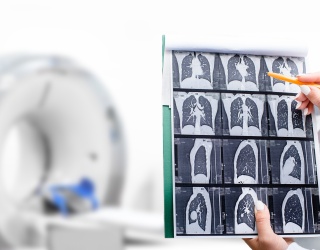
The second study focused on a vision-language foundation model (VLM) designed to generate chest X-ray reports automatically. Researchers assessed its performance before and after fine-tuning it with data from SimonMed's own outpatient network.
The investigational model was initially trained on more than 5 million chest X-ray image-report pairs. It was then fine-tuned using more than 150,000 adult outpatient examinations from SimonMed. The researchers tested the model on a consecutive cohort from 143 outpatient centers. Fine-tuning increased sensitivity, with a modest reduction in specificity. The largest improvement was seen in pulmonary nodules, where sensitivity rose from 62.6% to 80.8%.
The findings suggest that adapting foundation models to data from individual institutions may improve their ability to perform across different patient populations. The researchers also suggest that automated report generation could reduce radiologists' workload while maintaining clinically acceptable performance.
Two approaches to AI-assisted radiology
The studies address two distinct parts of the radiology workflow. AI-based prioritization can help bring examinations with suspected fractures to radiologists' attention sooner. Automated report generation, meanwhile, offers a potential way to streamline the interpretation and documentation of chest X-rays.
SimonMed Chief Medical Officer and Chief Innovation Officer Sean Raj, MD, MBA, commented on the research: "AI is transforming not just how quickly we identify important findings, but how radiology reports themselves are created."
He added: "Our research demonstrates how AI can reduce fracture reporting times from days to hours. Even more exciting, we're exploring autonomous chest X-ray report generation using vision-language models fine-tuned on data from our own outpatient practice. This represents an important step toward a future where AI can help radiologists work more efficiently and deliver meaningful insights to patients and physicians faster."
Together, the studies examine how AI could support radiology teams through faster fracture reporting and automated chest X-ray documentation.
Source: SimonMed