Lung cancer screening can save lives, but simply offering low-dose CT is not enough. Who gets screened, how often people return, how suspicious findings are managed, and whether healthcare systems have the capacity to run large programs may ultimately determine how much benefit screening delivers.
Approaches in Asia and Europe show how differently screening can be implemented — and why the system built around low-dose CT may be just as important as the screening test itself.
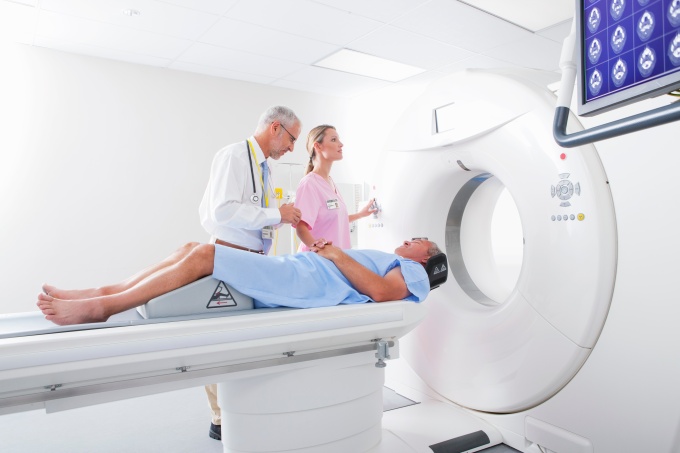
Who should be screened for lung cancer?
In Asia, one of the first challenges is deciding who should be screened. Most programs rely on age and smoking history, but that approach does not capture the full regional picture. Lung cancer among never-smokers, particularly women in East Asia, is an important concern. Taiwan has already responded by including family history of lung cancer as an eligibility criterion. Preliminary data presented from Taiwan’s national program showed an overall detection rate of 1.3%, increasing to 1.8% among non-smokers with a family history of lung cancer. Around 90% of cancers in participants with a family history were detected at stage 0 or I.
Those numbers, however, come with a warning. “Only disease-specific mortality is an appropriate measure for screening test,” said Jin Mo Goo, Professor of Radiology specializing in thoracic imaging at Seoul National University Hospital in Seoul.
High detection rates or large proportions of early-stage cancers should not automatically be seen as evidence that a screening program is working. Screening can uncover ground-glass and other subsolid nodules that may remain indolent for years. The MILD trial researchers suggested that selected lesions can be managed with active surveillance rather than immediate surgery.
The challenge is therefore to identify cancers that are likely to become clinically important while avoiding overdiagnosis and unnecessary treatment.
Screening intervals and interval cancers
How often screening should be performed adds another layer. Korea’s national program saw participation rise from 25% in 2019 to 51% in 2023. Yet interval cancers — tumors diagnosed between scheduled screening rounds — are also an important measure of program quality. In Korean data, 18.5% of cancers diagnosed within two years were interval cancers, and these patients had higher all-cause mortality than those whose tumors were detected through screening. The findings suggest that biennial screening may be suboptimal for Asian heavy smokers.
Europe is confronting many of the same questions within a very different healthcare landscape. The region remains a patchwork of national programs, pilots, and implementation strategies. Poland, Czechia, and Croatia already have nationwide programs, while other countries remain at different stages of rollout.
England offers one of the clearest examples of an implementation-first strategy. Rather than waiting until a uniform national system was ready, screening began in areas with higher lung cancer risk and expanded gradually. Early pilot programs screened more than 10,000 people and detected lung cancer in 2.2% of participants, with a false-positive rate of about 2%. In 2024, more than 2,000 cancers were detected through the program, about three quarters at stage I or II.
But eligibility remains unresolved. Many European programs currently target people aged 55 to 74 who are current or former smokers with at least a 20-pack-year history. According to Prokop, roughly half of the lung cancers that eventually occur would never have been eligible under existing criteria. European studies are exploring additional risk models, as well as questions around screening women and populations that are harder to reach.
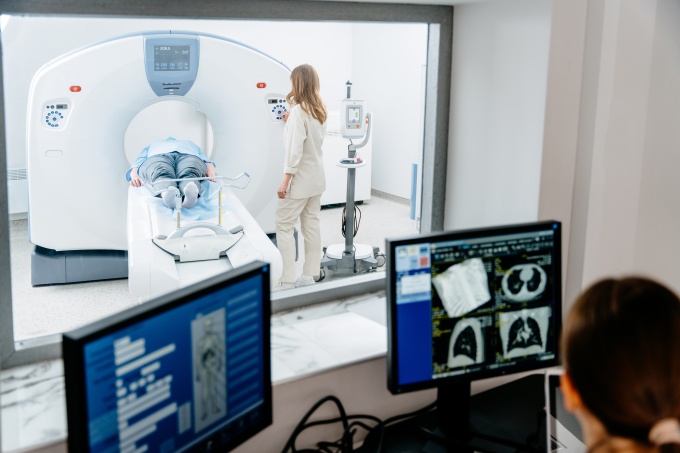
Scaling screening requires sufficient capacity
Even the best eligibility model will fail without sufficient infrastructure. Workforce capacity is a major obstacle to broader implementation.
“We don’t have enough radiologists if we would do it with a normal routine,” said Mathias Prokop, Professor of Radiology and Head of Imaging Science at Radboudumc in Nijmegen.
Screening will require structured workflows, training, and potentially additional capacity outside existing systems. Cost-effectiveness, participation, and the management of unnecessary follow-up procedures remain part of the same equation.
The experiences presented from Asia and Europe point to the same conclusion: lung cancer screening is not a single intervention that can simply be introduced and expected to work. Its success depends on the system built around it.
Finding the right people, bringing them into the program, choosing appropriate screening intervals, and distinguishing dangerous cancers from lesions that can safely be observed are all part of the screening process. The next phase of lung cancer screening is therefore not only about expanding access. It is about making sure that expansion translates into meaningful reductions in mortality without creating avoidable harm.
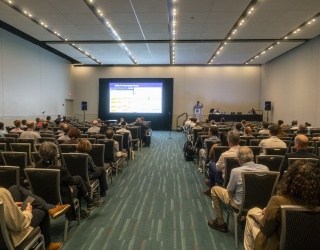
This article is based on presentations from the RSNA session “Global Insights and Updates on Lung Cancer Screening.”