Reproducible Positioning in High-Precision Radiotherapy
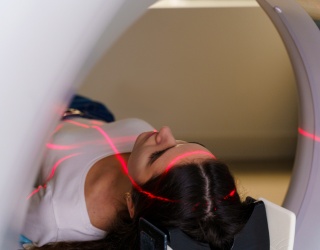
Maintaining consistent patient positioning throughout head and neck radiotherapy is becoming increasingly important as treatment techniques allow for more precise dose delivery. Intensity-Modulated Radiation Therapy (IMRT) and Volumetric Modulated Arc Therapy (VMAT) use steep dose gradients to concentrate radiation around target areas while limiting exposure to surrounding structures. However, this also leaves less room for positioning errors.
During a typical six- to seven-week treatment course, tumor shrinkage, weight loss, and changes in soft tissue can affect patient anatomy and make it harder to reproduce the position used during treatment planning.
Rajan Patel, founder and CEO of Kallisio, a Baltimore-based manufacturer of patient-specific intraoral positioning devices, identifies the oral cavity as a particular challenge. Although thermoplastic masks stabilize the patient's head, the tongue, lips, cheeks, and soft palate can still move.
“Cone-beam CT can show you the tongue moved,” Patel explains. “It can’t put it back.”
Positioning Variability and Treatment-Related Toxicity
Anatomical changes can cause the delivered radiation dose to deviate from the original treatment plan. Adaptive radiotherapy can address these changes, but requires additional physics and dosimetry resources.
The potential clinical implications extend beyond dose distribution. Research at Mayo Clinic involving 196 patients whose radiation fields included the oral cavity found that a higher mean oral cavity dose predicted opioid use and hospitalization during treatment and in the following 30 days. Another study at Roswell Park Comprehensive Cancer Center found that 29% of 657 patients receiving definitive chemoradiation experienced an unplanned hospitalization.
Patel argues that positioning variability should be considered in this context. "The difference between tight and loose shows up as mouth pain, opioids, and admissions," he says. "Not just as a number on a QA report."
Establishing Positioning as a Quality Metric
According to Patel, one of the challenges is that patient positioning is not systematically monitored as part of radiotherapy quality management. Although many centers record image-guidance shifts, few track them over time by patient, disease site, or positioning device.
"Machine QA has named owners and defined tolerances. Patient reproducibility usually has neither." Patel says.
He proposes assessing treatment quality through three aspects: whether the machine delivered the prescribed plan, whether the patient's anatomy matched the assumptions underlying that plan, and what happened to the patient clinically. "Most programs measure the first and the last," he says. "The middle one is the gap."
Systematic monitoring of patient positioning could provide radiotherapy centers with an additional quality metric, helping them assess setup variability alongside machine performance and clinical outcomes.
Source: Kallisio