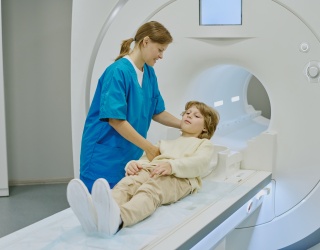
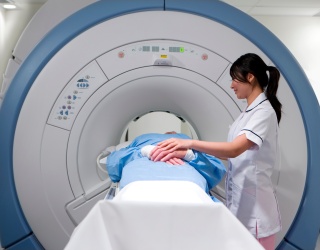
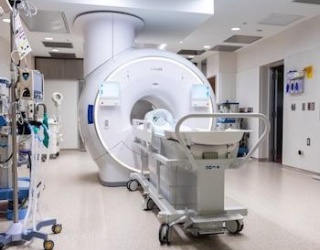
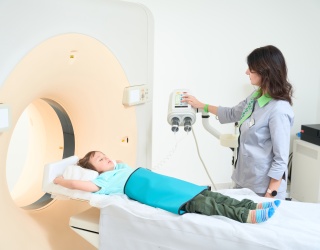
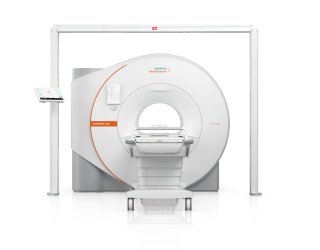
A new multi-center study published in JACR found that MRI safety incidents in pediatric imaging departments remain relatively uncommon but continue to pose risks for patients and staff.
At ISMRM 2026, GE HealthCare is presenting new MRI technologies and research tools focused on AI-driven workflows, deep-learning reconstruction, helium-free MRI systems, and collaborative neuroscience research.
Esaote has presented the latest developments of I-Genius, an open intraoperative MRI (iMRI) concept intended to enable multiple MRI acquisitions during glioma surgery.
SimonMed has deployed AIRS Medical’s AI-powered SwiftMR solution across its nationwide imaging network to improve MRI image quality, reduce scan times, and support workflow efficiency across a multi-vendor MRI infrastructure.
A dual imaging approach combining OCT and cardiac MRI identified the underlying cause in 79% of patients with myocardial infarction and non-obstructive coronary arteries (MINOCA).
Combining diffusion MRI parameters with macromolecular proton fraction (MPF) achieved a 96% AUC in differentiating low- and high-grade cervical cancer.
Bracco Imaging showcased AiMIFY® at ECR, an AI-powered MRI contrast enhancement solution developed with Subtle Medical that analyzes brain scans and amplifies existing contrast signals.
UChicago Medicine has introduced intraoperative MRI technology to support complex neurosurgical procedures, enabling real-time imaging during surgery and enhancing precision, safety, and workflow efficiency.
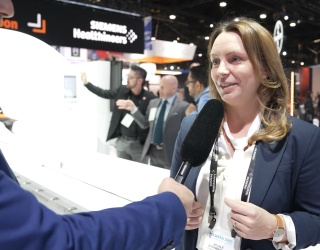
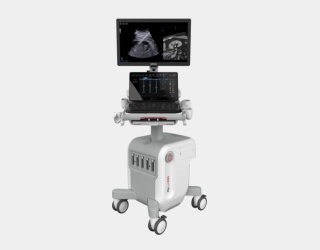
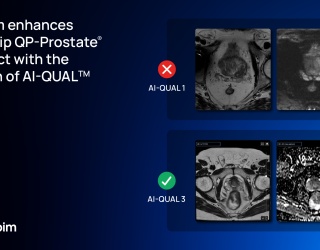
Italian imaging specialist introduced new ultrasound platforms for interventional radiology alongside AI-powered MRI and enterprise imaging innovations.
Bayer has reported positive Phase III subgroup data for its investigational low-dose MRI contrast agent gadoquatrane in cardiac MRI. The results, presented at SCMR 2026, support efficacy and safety with a 60% reduction in gadolinium dose compared to standard macrocyclic agents.
At ECR 2026 in Vienna, Guerbet will mark its 100th anniversary while presenting developments across contrast-enhanced MRI, real-world evidence, and international collaboration
NHS Fife has implemented Siemens Healthineers’ Deep Resolve technology to shorten MRI scan times by more than 20%. The AI-based image reconstruction approach has reduced waiting times, and enabled nearly 1,900 additional MRI appointments within six months.
New research suggests that resting-state functional MRI performed shortly after traumatic brain injury may help predict long-term recovery. Specific brain connectivity patterns were found to be associated with functional outcomes six months after injury.
The American Society of Echocardiography (ASE) has reviewed its healthcare advocacy activities in 2025, highlighting efforts related to Medicare reimbursement, workforce shortages, artificial intelligence policy, and federal research funding in cardiovascular imaging.
The European Society of Radiology (ESR) has welcomed the European Commission’s Safe Hearts Plan, a new EU-wide strategy to address cardiovascular health in Europe.
Bayer has released late-breaking results from the QUANTI Pediatric study, showing that its investigational low-dose MRI contrast agent gadoquatrane met all primary and secondary endpoints in children.
A session highlighting how amyloid, tau, and FDG PET sharpen Alzheimer’s diagnosis, support therapy decisions, and improve safety monitoring, marking a key advance in precision imaging.
This website uses cookies to give our readers the best website experience. Please refer to our privacy policy to find out how we use cookies and how you can edit your preferences.